

Picture the process of selecting an energy storage system for a business facility. Beyond performance specifications, a critical evaluation area rests on the official safety certifications the product holds. These credentials form a verifiable framework that dictates the security and compliance of the installation. For manufacturers like HiTHIUM, achieving these benchmarks is a core aspect of their product development cycle. Their commercial energy storage systems are engineered with these requirements as foundational parameters, ensuring that the resulting commercial battery storage solutions meet rigorous external scrutiny.
International Certifications as a Compliance Blueprint
A complex landscape of international standards governs the safety of stationary battery systems. HiTHIUM designs its products to align with this blueprint from the outset. Certifications such as UL 1973, which evaluates the safety of batteries for stationary use, and IEC 62619, which outlines safety requirements for industrial applications, are integral targets. Furthermore, the UN 38.3 certification is secured, confirming the safety of cells and batteries during transportation. By treating these standards as a design blueprint, HiTHIUM ensures their commercial energy storage systems are built for global market compliance and operational security from the initial design phase.
Mitigating Thermal Risk with System-Level Validation
One of the most significant safety validations for a commercial battery storage solution involves assessing its response to extreme thermal events. The UL 9540A test method is specifically designed to evaluate thermal runaway fire propagation within battery energy storage systems. Passing this stringent evaluation demonstrates that a system’s design—including its cells, modules, and enclosures—effectively mitigates the spread of fire. This system-level validation is crucial for facility planners and insurers, providing documented evidence that the commercial energy storage systems incorporate engineered safety measures to contain potential cell-level failures.
Engineered for Reliability in Diverse Operating Conditions
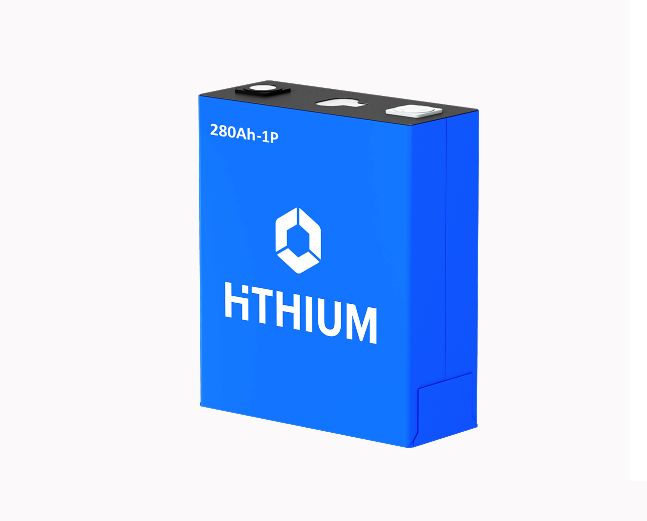
Formal certifications are supported by underlying product engineering that guarantees performance under stress. HiTHIUM‘s technical specifications, such as those for the ESS Cell 280Ah-1P (model LFP71173207), highlight this principle. The cell’s ultra-wide operating temperature range, allowing discharge from -30°C to 60°C, ensures reliable function in harsh environments. This inherent reliability supports the safety case by preventing performance issues that could lead to unstable operation. When a commercial battery storage solution maintains stable charging and discharging across a broad temperature spectrum, it contributes directly to the long-term safety profile validated by certifications.
The safety of commercial energy storage systems is therefore a multi-layered outcome, defined by both official certification and the inherent product design. HiTHIUM’s approach integrates these elements, treating international standards as a mandatory blueprint and supporting them with cell-level engineering for durability and thermal resilience. For businesses, this means the selected commercial battery storage solutions come with a structured, verified safety profile that addresses both regulatory mandates and real-world operational demands, forming a critical basis for investment and deployment decisions.
