

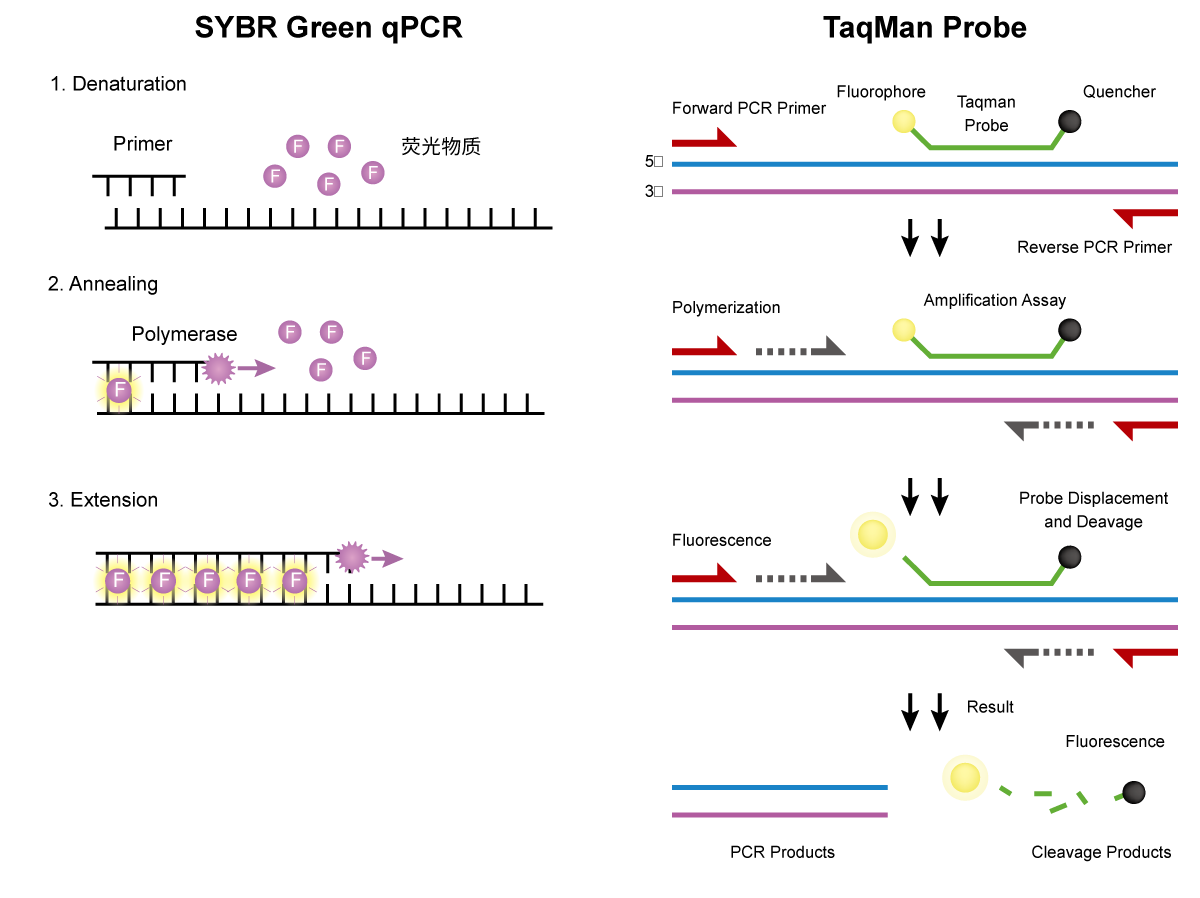
Quantitative PCR (qPCR) is a widely used technique in molecular biology, allowing researchers to quantify nucleic acids with high sensitivity. Among the many factors that affect qPCR performance, qPCR Probe Fluorescence Signal plays a crucial role in determining the accuracy and reproducibility of results. Synbio Technologies provides high-quality probes designed to optimize the fluorescence signal for consistent and reliable measurements. Ensuring probe purity is a fundamental step to achieve low cycle threshold (Ct) values, which are critical in detecting even low-abundance targets efficiently.
Probe Purity and Its Impact on Fluorescence Signal
The purity of a qPCR probe directly influences the fluorescence signal generated during amplification. Impurities or truncated sequences can quench the fluorescence, reducing overall signal strength. When qPCR Probe Fluorescence Signal is weakened, the Ct value may appear artificially high, indicating a lower quantity of target nucleic acid than actually present. By contrast, highly pure probes minimize background noise and maximize the detectable fluorescence, enabling a more accurate and lower Ct value. Synbio Technologies ensures rigorous quality control to provide probes with high purity, which is critical for sensitive qPCR applications.
Factors Affecting qPCR Probe Performance
Beyond purity, several factors can affect the efficiency of qPCR Probe Fluorescence Signal. These include probe concentration, labeling efficiency, and the sequence design of the probe. Impure probes often contain incomplete or degraded sequences that interfere with hybridization to the target. This interference can lead to delayed amplification and inconsistent Ct values. Synbio Technologies offers probes that are chemically synthesized and purified to remove truncated sequences, ensuring optimal hybridization and maximal fluorescence detection. Researchers benefit from improved reproducibility and more reliable quantification by using these high-quality products.
Practical Advantages of Using High-Purity Probes
Using high-purity probes offers practical advantages in experimental workflows. Strong and consistent fluorescence signal allows for lower detection limits, which is particularly important in diagnostics and research involving rare transcripts. High-purity probes reduce the need for repeated experiments caused by inconsistent Ct values, saving time and resources. In addition, Synbio Technologies provides detailed technical data and guidance on factors affecting the qPCR Probe Fluorescence Signal, allowing researchers to optimize their assays with confidence. This combination of product quality and support ensures better overall performance in quantitative PCR applications.
Conclusion: Optimizing qPCR Results Through Probe Purity
In conclusion, the purity of qPCR probes plays a pivotal role in obtaining low Ct values. Impurities can significantly reduce the fluorescence signal, leading to inaccurate quantification and delayed detection. High-quality probes from Synbio Technologies help maximize signal strength, improve reproducibility, and support reliable results. Researchers focusing on sensitive or low-abundance targets can achieve more accurate outcomes by prioritizing probe purity and following best practices for probe design and handling. By understanding and controlling these factors, laboratories can enhance their qPCR performance, ensuring precise and meaningful data.
