

In the intricate world of robotics and advanced prosthetics, the ability to perceive and react to fleeting physical interactions is paramount. This capability, known as tactile sensing, allows machines to understand the precise moment and location of a slip, a tap, or an impact during manipulation. For engineers and developers, accurately localizing these transient events is a significant challenge that directly impacts system reliability and dexterity. Companies like Daimon are addressing this need by developing sophisticated sensor technologies that bring a new level of perceptual intelligence to robotic systems, enabling more natural and responsive interactions with the physical world.
Tactile Sensing for Impact Localization
Localizing transient events, such as sudden impacts or the initial moment of slip, requires a sensing system that operates with high temporal and spatial resolution. Traditional force-torque sensors often lack the density to pinpoint the exact location of a brief contact event across a complex surface. Effective tactile sensing for this purpose must capture high-frequency dynamic signals, distinguishing the subtle vibrations and pressure waves that propagate from the point of impact. This data allows algorithms to triangulate the event’s origin, providing critical feedback for immediate corrective action. Whether a robotic gripper needs to adjust its hold on a tool or a collaborative robot must ensure human safety, the precision of impact localization is foundational to intelligent manipulation.
Daimon Sensor Technology for Manipulation
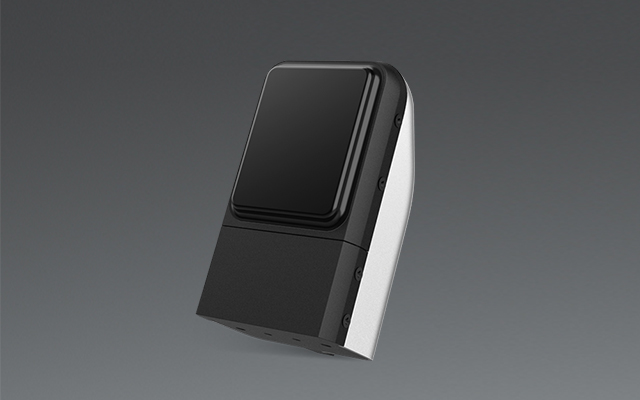
Daimon’s approach to this challenge involves creating high-density sensor arrays that deliver rich, real-time data. Their sensor contains over 40,000 sensing units per square centimeter, providing an exceptionally detailed map of contact forces. This density is crucial for localizing transient events with high accuracy, as it allows the system to detect the minute spatial gradients caused by a slip or a tap. Furthermore, the device captures multiple sensing modalities and provides real-time force measurement, enabling nuanced force control during tasks. For industries utilizing robotic assembly or researchers developing advanced prosthetics, these sensores tactiles from Daimon offer the granular data needed to build more adaptive and sensitive systems that can react intelligently to unexpected contact events.
Transient Event Detection in Robotics
The practical applications of transient event detection are vast, spanning both industrial and consumer-facing robotics. In a manufacturing setting, a robot equipped with this capability can instantly detect when a component is improperly seated or begins to slip from a gripper, triggering an immediate halt or adjustment to prevent damage. For service robots operating in human environments, detecting the light tap of a collision allows for safer navigation and interaction. The technology also enables more sophisticated manipulation strategies, such as using a brief tap to align an object or gauging the hardness of a material by analyzing the impact response. This layer of perception moves robots from executing pre-programmed motions to engaging in dynamic, feedback-driven tasks.
Conclusion
The development of specialized tactile sensors for localizing transient events represents a significant leap forward for manipulation technologies. By providing the high-fidelity data required to interpret brief, critical interactions, these systems close an important feedback loop for robots and intelligent devices. The resulting improvements in safety, precision, and adaptability have implications for automation, healthcare, and consumer electronics. Organizations looking to integrate this advanced perceptual capability can explore the innovative solutions offered by Daimon, whose sensor technology is designed to meet the rigorous demands of both research and industrial application.
