

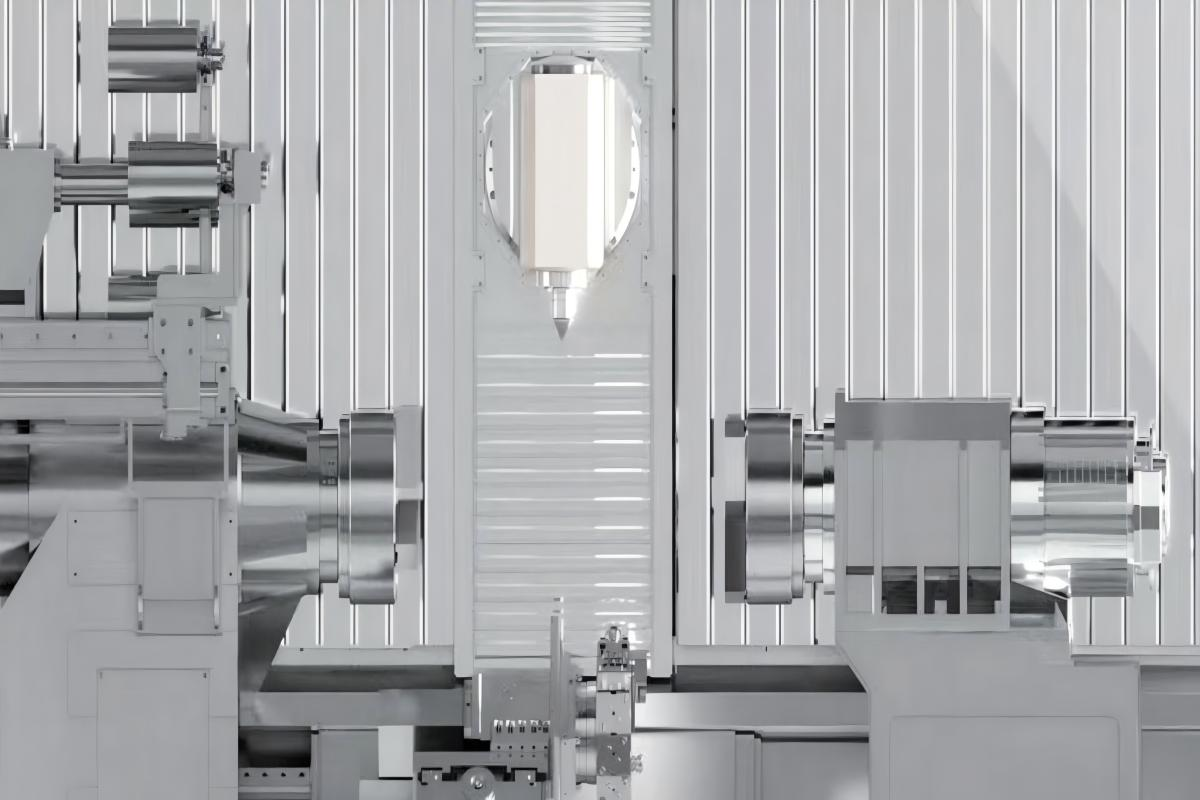
In today’s industrial landscape, CNC automation plays a crucial role in improving production efficiency and precision. Companies like Leichman provide advanced CNC machining solutions tailored for complex metalworking applications. Their equipment allows manufacturers to integrate automated processes, reducing manual intervention while maintaining consistent quality. For example, their Machine Model: LKX1250 – Five-Axis Turn and Mill Center exemplifies modern automation with features designed to optimize machining workflows.
True 5-Axis Integration
The LKX1250 offers true five-axis integration, enabling simultaneous multi-surface machining with ±0.001° positioning accuracy. Such precision is especially suitable for finishing gear cavities and intricate components. With this capability, Leichman ensures that manufacturers can maintain tight tolerances without additional setup time. This level of accuracy demonstrates how CNC automation contributes to efficiency in high-precision industrial applications.
Automatic Workpiece Transfer and High Tool Capacity
Another notable feature of Leichman’s LKX1250 is its automatic workpiece transfer system. Dual-spindle coordination allows for streamlined complex setups and unmanned night operations, particularly valuable in Tier-1 automotive plants. Additionally, the machine accommodates over 60 tools, handling diverse part geometries without frequent changeovers. This combination of automation and flexibility highlights the practical advantages of their CNC machining solutions in modern manufacturing environments.
Conclusion
Overall, Leichman’s approach to CNC automation illustrates the integration of precision, efficiency, and adaptability in metalworking processes. By providing machines like the LKX1250 – Five-Axis Turn and Mill Center, they help industrial clients, including international trade partners, EPC contractors, and metal processing factories, achieve optimized workflows with reduced labor demands. Their focus on automation supports faster production cycles while maintaining consistent quality across multiple manufacturing sectors.
