

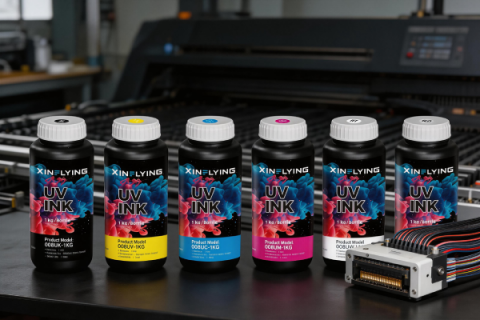
In the industrial printing sector, the longevity of a printed product is directly tied to the perceived value and reliability of the B2B printing provider. Commercial clients, ranging from outdoor signage agencies to custom promotional product distributors, demand graphics that can withstand harsh environmental conditions without fading, peeling, or degrading. This demand has made ultraviolet curing technology the standard across high-volume production facilities. The core advantage of this process lies in the photochemical reaction that instantly polymerizes the liquid upon exposure to ultraviolet light, creating a robust, cross-linked structural matrix. However, achieving baseline curing is only the first step. To truly maximize the mechanical and chemical resistance of these prints, operators must implement stringent quality control measures throughout the entire workflow. By understanding the intricate chemistry of high-grade UV Ink and applying advanced production techniques, commercial facilities can significantly extend the lifecycle of their outputs, thereby reducing costly reprints, enhancing client satisfaction, and securing long-term manufacturing contracts in a highly competitive market.
Optimizing Curing Parameters for Maximum Adhesion
The foundation of print durability is established at the exact moment of polymerization, which is entirely dependent on the calibration of your ultraviolet curing lamps. For industrial equipment, ensuring that the light intensity matches the specific photoinitiator requirements of your printing fluid is critical. If the LED lamps are running at a degraded output or if the carriage speed is set too high, the chemical cross-linking process remains incomplete, resulting in a microscopic surface tackiness and a fundamentally weaker bond to the substrate. This under-cured state drastically reduces the scratch resistance and chemical immunity of the final product, leaving it vulnerable to abrasion during shipping or daily use. Conversely, over-curing by applying excessive thermal energy can lead to substrate warping and a brittle ink layer that is prone to cracking upon flexing. Production managers must routinely measure the millijoules of ultraviolet energy reaching the substrate using a radiometer and adjust their printer profiles accordingly. Achieving this precise energy balance ensures that the polymer chains form a dense, impenetrable network, locking the pigments securely into place and providing the maximum possible physical durability for rigid and flexible commercial applications.
Understanding Environmental Resistance and Lifespan
When commercial clients invest in large-scale outdoor signage, vehicle wraps, or architectural displays, the most frequent inquiry centers around how long does uv ink last under direct exposure to harsh environmental variables. The baseline lifespan of an ultraviolet-cured print in an indoor, climate-controlled environment is virtually indefinite, often outlasting the physical substrate itself. However, for outdoor applications, the durability heavily depends on the formulation’s resistance to photodegradation caused by natural sunlight, as well as its ability to withstand extreme temperature fluctuations and moisture ingress. Premium formulations are manufactured with specialized automotive-grade pigments and advanced UV inhibitors that prevent the molecular breakdown of the colorants, allowing prints to maintain their vibrant optical density for two to three years outdoors without additional lamination. To extend this durability up to five years or more for critical architectural or fleet graphics, print shops must apply compatible clear coats or overlaminates. These protective layers act as a sacrificial barrier against airborne pollutants, acid rain, and intense ultraviolet radiation. By educating clients on the variables of environmental exposure and offering engineered protective solutions, B2B print providers can confidently guarantee their exterior applications against premature fading or chalking.
Surface Preparation and Substrate Compatibility
Even the most advanced photochemical formulations cannot compensate for poor substrate preparation, which remains the leading cause of premature delamination in industrial printing. In B2B applications involving difficult, non-porous materials such as extruded acrylic, untreated glass, brushed aluminum, or corrugated plastics, the surface tension of the substrate must be meticulously managed. Printing directly onto a contaminated surface—even one with microscopic traces of manufacturing oils, fingerprints, or airborne dust—creates an invisible barrier that prevents the polymerizing fluid from properly anchoring to the material structure. Facilities must implement rigorous pre-press cleaning protocols using isopropyl alcohol or specialized degreasers. Furthermore, checking the dyne level of the material is essential to ensure it exceeds the surface tension of the ink, which promotes optimal droplet spread and wetting. For notoriously low-energy surfaces like polypropylene or glass, the application of chemical adhesion promoters or primers is absolutely mandatory. These specialized bonding agents act as a chemical bridge, covalently bonding with both the substrate surface and the cured polymer layer. By strictly enforcing these pre-treatment standards, print shops effectively eliminate the vast majority of peeling risks and ensure that the graphics remain permanently bonded under severe mechanical stress.
Strategic Maintenance and Storage Protocols
The longevity of a printed output is intrinsically linked to the chemical stability of the fluid before it ever reaches the printhead, making environmental control within the production facility a critical factor. High-performance printing fluids are highly reactive by design; therefore, improper storage conditions can cause premature polymerization or pigment settling within the primary ink tanks. Facilities must store these materials in a climate-controlled environment, strictly avoiding extreme temperature fluctuations and direct exposure to any ambient ultraviolet light sources. Furthermore, maintaining the internal plumbing and printheads of the machinery is essential for ensuring that the droplet formulation remains pure. Micro-clogs or particulate contamination within the nozzles can lead to inconsistent droplet placement and insufficient pigment density on the substrate, which directly compromises the physical barrier of the cured layer. Implementing daily automated maintenance routines, alongside rigorous weekly manual cleanings of the capping stations and wiper blades, guarantees that the chemical composition remains unaltered during jetting. By safeguarding the integrity of the raw materials and the fluid delivery system, B2B commercial print facilities can consistently produce high-fidelity, industrial-strength graphics that exceed the durability expectations of their most demanding corporate clients.
