

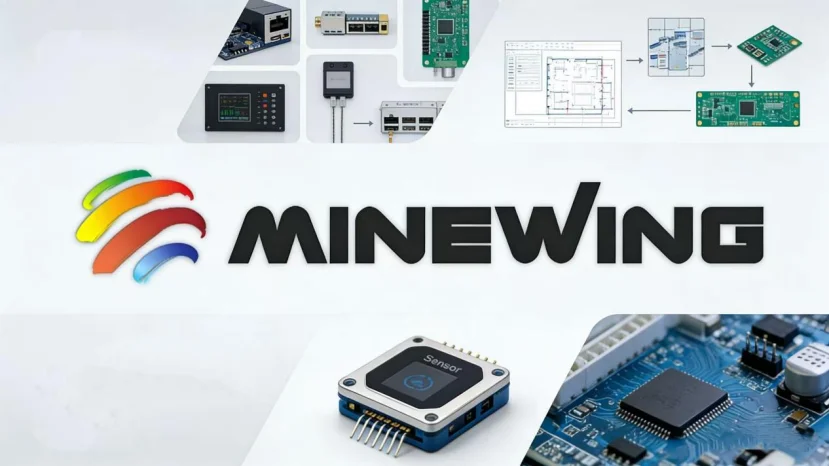
The connection between electronics manufacturing and smart manufacturing is easier to understand when viewed through the flow of product information. A circuit board starts as an engineering design, becomes a physical assembly, goes through inspection, and finally becomes part of a finished product. At each step, data and feedback can influence what happens next. This is why electronic manufacturing services news increasingly discusses digital production, automated inspection, connected equipment, and data-based quality control.
For companies developing IoT devices, smart home products, wearables, and industrial electronics, this connection has practical value. Their products often involve several engineering disciplines, so manufacturing information needs to move between design and production without unnecessary gaps.
What Does Smart Manufacturing Add?
Smart manufacturing uses connected equipment, digital records, automated processes, and production data to improve how a factory operates. The purpose is not simply to replace manual work with machines.
In electronics production, machines can record information during processes such as component placement, soldering, inspection, and testing. This information gives production teams more detail about what happened during manufacturing.
The data can also support engineering decisions. When a recurring issue appears, teams can examine production records and compare them with the product design.
Where Does EMS Fit Into the Process?
Electronics manufacturing services can cover several stages of a product’s development and production. Depending on the project, these stages may include PCB design, PCBA production, assembly, testing, and packaging.
This creates a direct connection with smart manufacturing. When engineering and production activities are handled within a coordinated workflow, information from one stage can be used to support another.
For example, a production issue may reveal that a PCB feature is difficult to assemble. Engineers can review the design and consider a suitable modification before the product moves into a larger production run.
Why Is PCB Data Important?
PCB assembly is a good example of how product design and manufacturing information can interact. Component placement, board layout, soldering requirements, and inspection criteria all affect the assembly process.
Production equipment can generate records during assembly and inspection. These records can help teams identify patterns when a product does not perform as expected.
This becomes more relevant for IoT products with sensors, wireless modules, and embedded processing. A change to one component can affect the board layout, firmware, power requirements, or enclosure. Manufacturing feedback can therefore become part of the engineering review.
DFM Creates an Earlier Feedback Loop
Design for Manufacturing, or DFM, provides another connection between product development and production. It evaluates whether a design can be manufactured in a practical and repeatable way.
A DFM review may examine component selection, PCB assembly, mechanical tolerances, connectors, and production methods. The exact checks depend on the product and its manufacturing process.
Rapid prototyping can support this work. A physical prototype gives teams a chance to check dimensions, assembly, functionality, and testing before production requirements become more fixed.
How Does Quality Data Support Decisions?
Quality control in smart manufacturing is not limited to checking the finished product. Data from different production stages can provide additional information about where a problem may have occurred.
For instance, repeated test failures may be connected to a component, assembly step, fixture, or design feature. Reviewing production records can help narrow the possible causes.
This approach is useful when products contain both electronic and mechanical parts. A finished device may include a PCBA, enclosure, battery, sensors, connectors, and firmware. Each part can introduce a different production consideration.
What Happens When Production Becomes More Complex?
As production volumes increase, manufacturing processes often become more structured. The team may need clearer inspection procedures, production records, sourcing plans, and testing methods.
This is also the point where communication between engineering and manufacturing becomes important. A design that works well for a small number of prototypes may require changes before larger quantities can be produced efficiently.
The same principle applies when a product changes during development. A new processor, wireless module, sensor, or enclosure can affect both the product design and the production process.
An Integrated Approach in Practice
For companies that need external development and manufacturing support, an integrated workflow can reduce unnecessary handoffs. It allows engineering questions to be discussed alongside manufacturing requirements.
Minewing is based in Shenzhen, China, and has more than 20 years of experience in electronics manufacturing. They provide services covering PCB design, PCBA production, enclosure design and manufacturing, assembly, testing, and packaging. Their cooperation models include OEM, ODM, and JDM, with no MOQ requirements stated for their services.
.
Why Does Mechanical Production Matter?
Smart manufacturing should not focus only on circuit boards. Mechanical production can affect how electronic components are assembled and protected inside the final product.
A compact enclosure must accommodate the PCB, battery, sensors, connectors, and other components. Changes to one part can create space or assembly issues elsewhere.
This is particularly relevant for wearables and small smart home devices.
Coordinating electronic and mechanical requirements during development can help teams identify practical manufacturing concerns before production scales.
When Should Companies Evaluate the Workflow?
A company can examine its manufacturing workflow at several project milestones. Concept development is useful for checking production feasibility. Prototype development can reveal assembly and design issues. Pilot production can provide information about process consistency and testing.
Supplier evaluation is another important point. Companies can ask how DFM is handled, how production data is recorded, which processes are performed internally, and how quality issues are investigated.
These questions give technical and project teams a clearer picture of how a manufacturing partner fits into the product development process.
From Production Data to Better Coordination
The relationship between EMS and smart manufacturing is ultimately based on how information moves through the product lifecycle. Connected machines are useful, but the resulting data needs to reach people who can make appropriate engineering or production decisions.
For CTOs, engineers, and project managers, this means manufacturing should be considered before a design is finalized. DFM, prototyping, assembly, testing, and quality control can provide feedback at different stages of development.
As electronics manufacturing services news continues to cover connected factories, automation, and production data, companies can focus on developments that relate directly to their products. The practical goal is not to adopt every new manufacturing technology, but to build a clearer connection between design decisions, production processes, and measurable manufacturing results.
