

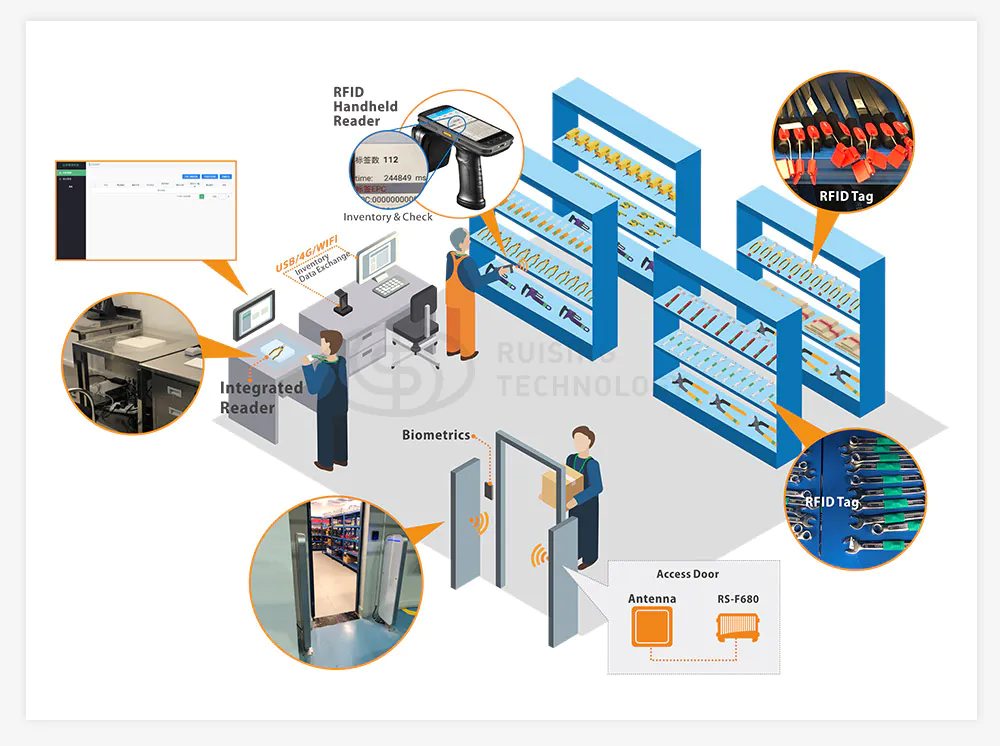
Managing high-density warehouse inventory requires absolute precision to eliminate unseen stock discrepancies across vast storage zones. Traditional bulky transponder modules fail miserably when applied to curved merchandise, irregular packaging, or space-constrained retail goods.
Operational leaders encounter severe visibility gaps because rigid hardware cracks under normal handling stress and mechanical deformation. Overcoming these spatial hurdles demands specialized engineering solutions centered on ultra-thin identification media designed for modern supply chains.
Operational managers frequently deploy flexible transponder stickers to track delicate items without altering physical product dimensions or visual aesthetics. Specialized production methods bond microscopic silicon circuits directly onto pliable polymer substrates to withstand rigorous handling. Such architectural choices transform standard inventory workflows by enabling seamless attachment to challenging geometric surfaces.
Overcoming Curvature and Surface Conformity Obstacles
Curved packaging surfaces create severe mechanical tension that standard identification hardware cannot withstand during automated transit cycles. Cylindrical bottles and rounded containers demand transponders that conform tightly to radial contours without peeling away. Engineers must design layouts that absorb multi-directional stretching forces without compromising internal circuit continuity or read reliability.
Maintaining tight radius conformity prevents edge lifting during high-speed conveyor sorting operations across distribution centers. Specialized converting machinery laminates conductive traces onto ultra-thin plastic films designed specifically for extreme elongation. Proper material selection ensures transponders stay securely anchored regardless of surface texture variations.
Dynamic supply chain networks require hardware that adapts effortlessly to thermal expansion and contraction cycles on curved containers. Industrial containers frequently expand under hot warehouse conditions, stressing adhesive bonds and embedded metallic traces alike. Designing resilient transponder layouts prevents structural failure during these severe volumetric fluctuations.
Substrate Mechanics and Microchip Protection Under Stress
Silicon microchips soldered onto thin polymer layers face extreme vulnerability during physical bending and impact events. Protective overlay films distribute mechanical load evenly across the central silicon die to prevent cracking. Rigid encasements often fracture instantly under pressure, whereas flexible substrates absorb shock waves effectively.
Engineered dielectric layers isolate sensitive circuits from environmental moisture and mechanical friction during transit. Expert manufacturers utilize specialized polyimide and polyethylene terephthalate films to provide maximum tear resistance. Such material durability guarantees long operational lifespans even in abrasive warehouse environments.
Internal circuitry shielding protects delicate micro-components from electrostatic discharge during high-speed automated application processes. Specialized antistatic coatings prevent electrical arcs from damaging integrated memory banks during roll unwinding phases. Ensuring electrical integrity at the microscopic level prevents premature device failure in the field.
Adhesive Chemistry for Diverse Industrial Substrates
Surface energy properties dictate how effectively pressure-sensitive adhesives bond with corrugated cardboard, plastics, or raw metals. Choosing reliable industrial RFID labels prevents premature delamination under severe temperature fluctuations and humidity spikes. Temperature shifts create shear stress that ruins substandard adhesive bonds within days of application.
Selecting custom chemical formulations ensures permanent anchorage across oily metals and textured synthetic packaging materials. High-tack acrylic adhesives penetrate microscopic surface pores to lock identification media securely in place. Laboratory testing validates bond strength under extreme thermal cycling before deployment commences.
Chemical compatibility testing ensures that adhesive components do not degrade sensitive packaging inks or plastic containers over time. Industrial clients demand certified bonding agents that withstand aggressive cleaning agents and sanitization protocols in manufacturing plants. Robust bonding integrity eliminates missing asset records caused by fallen tracking tags.
Maintaining Antenna Resonance During Physical Flexing
Electromagnetic impedance shifts dramatically whenever a flexible transponder bends around a tight corner or edge. Tuning copper etched traces precisely compensates for frequency detuning caused by mechanical deformation. Flexible RFID label performance can change when the label bends around curved surfaces, so label construction and installation should be validated on the intended asset. RSTC offers flexible and printable RFID label options for different tracking applications.
Tuning processes evaluate capacitive reactance under simulated bending stress to guarantee robust signal transmission. Deploying high-performance RFID chip labels eliminates reading failures caused by impedance mismatch during transit. Supply chain visibility improves dramatically once transponder antennas maintain peak resonance on irregular assets.
Radio frequency radiation patterns must remain stable even when transponders experience twisting forces along multiple axes simultaneously. Multi-directional antenna layouts prevent signal nulls that cause readers to miss vital inventory updates. Superior radiation efficiency guarantees reliable data capture across complex multi-tier warehouse racking systems.
RSTC provides customized RFID label and system options that can be evaluated according to product geometry, mounting surface, and application requirements. Seamless integration across automated sorting lines accelerates inventory processing speeds while reducing manual scanning errors.
Integrating Identification Media With Automated Sorting Systems
High-speed sorting machinery demands flawless reading performance from every attached tracking token passing through automated sorting portals. Optical sensors combined with radio frequency gates capture data instantaneously without requiring line-of-sight alignment. Automated routing protocols direct shipments accurately to designated dispatch bays based on real-time transponder telemetry and database triggers.
Logistics operators rely on consistent reader responsiveness to eliminate bottlenecks at loading docks and staging areas. Synchronized data capture prevents traffic congestion during peak operational hours in distribution facilities. Reliable identification media directly enhances overall throughput and supply chain velocity.
Inventory tracking precision depends entirely on selecting hardware engineered for mechanical resilience and electrical stability. Mastering flexibility challenges turns chaotic supply chain environments into fully transparent operational networks. Unlocking true inventory transparency requires specialized RFID Labels designed for complex physical demands.
Utilizing premium RFID chip labels ensures long-term asset visibility without compromising packaging integrity or aesthetics. Continuous engineering refinement remains the definitive solution for overcoming spatial tracking barriers in modern logistics networks.
