

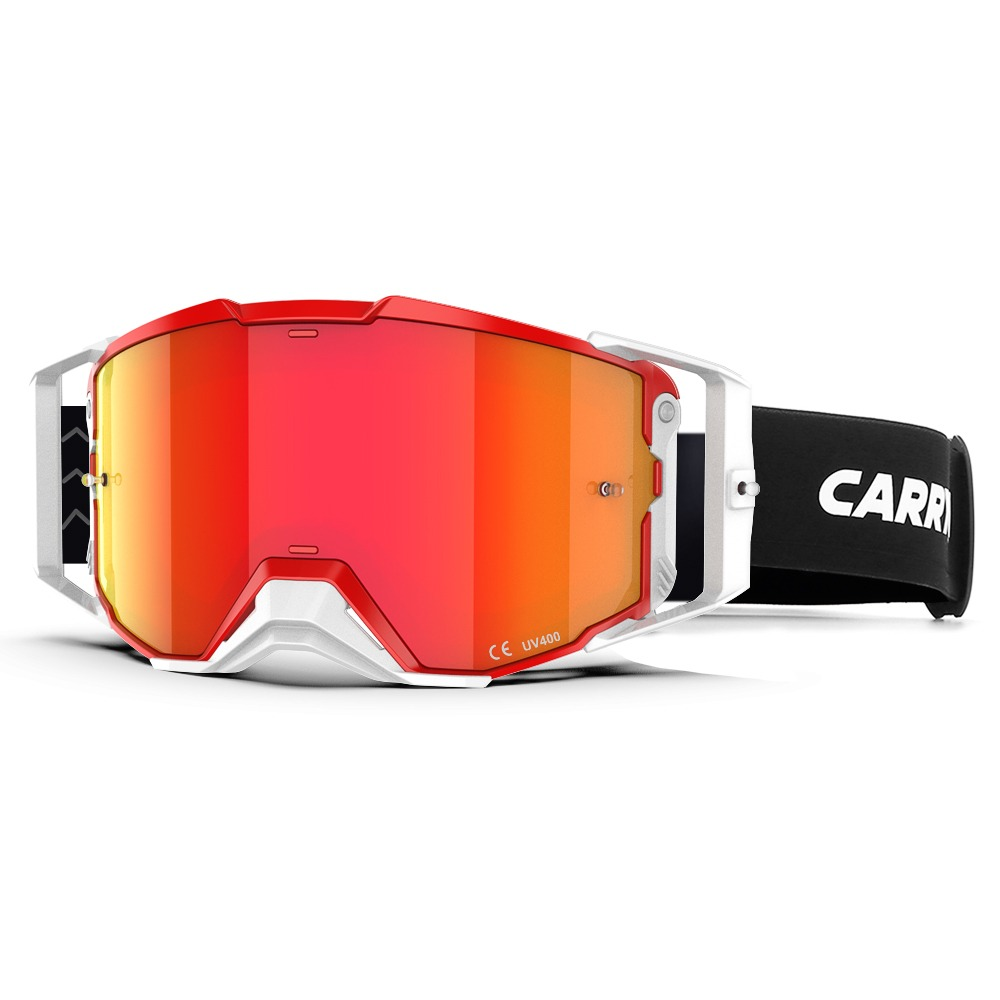
A motocross goggle lens does not need to be changed on a fixed calendar. The more useful interval depends on what the lens has been exposed to and whether its condition still supports clear riding vision. Mud, dust, rain, roost, repeated cleaning, and normal wear can all affect a lens over time. Riders can therefore use visible damage, reduced clarity, and changes in surface condition as practical signs for replacement.
Replace the Lens When Clarity Starts to Decline
The first checkpoint is the viewing area itself. Deep scratches, cracks, heavy scuffing, or surface damage can interfere with vision. Even when a mark looks minor off the bike, its effect can become more noticeable when sunlight, dust, or moisture reaches the lens.
A practical inspection should focus on the central viewing zone and the areas used most often when looking through turns or over changing terrain. If cleaning no longer restores a clear surface, or damage remains across the main viewing area, replacing the lens becomes a reasonable next step.
Mud and Dust Change the Equation
Motocross riding exposes goggles to conditions that can cover a lens within seconds, which is why tear-off and roll-off systems are used as visibility-management options. Mud, roost, rain, dust, and sweat are common sources of that contamination.
These systems handle contamination differently from a permanent lens replacement. Tear-offs place transparent film sheets over the main lens and allow the rider to remove a dirty layer when visibility drops. Roll-offs move a continuous clean film across the lens through a canister system. The main lens can therefore remain in service while the temporary cleaning layer handles short-term dirt.
Anti-Fog Performance Is Another Checkpoint
A lens can remain physically intact while becoming harder to use because of recurring fogging. The YM855 is listed with anti-fog lens features, so this model illustrates why lens condition should be evaluated beyond scratches alone.
For riders, persistent fogging may deserve attention when it continues during use even though the lens appears undamaged. However, an anti-fog specification should not be interpreted as permanent resistance to every riding condition. Heat, moisture, ventilation, and riding intensity can all affect what the rider experiences.
Why Quick-Change Designs Matter
Frequent riders may value a system that makes lens changes easier to handle at the track. The YM855 is presented as magnetic lens motocross goggles for dirt bike and MX racing, with “quick change” included in its product title. That makes the model relevant to buyers comparing quick change motocross goggles for different riding conditions or setups.
A quick-change system can also influence how a brand plans its eyewear range. A compatible lens platform can make different lens configurations easier to organize around one frame design. For distributors, that can simplify discussions about replacement inventory, product variants, and accessory planning.
What YM855 Specifies
The official product page identifies the YM855 as magnetic lens motocross goggles for dirt bike and MX racing. Its listed specifications include a cylindrical lens design, anti-fog and scratch-resistant lens features, a durable polycarbonate lens, and a flexible frame combining thermoplastic polyurethane (TPU) and ABS. The page also lists UV400 protection, helmet compatibility, multi-layer foam padding, and compatibility with roll-off and tear-off systems.
These details define what the model is designed to offer. Buyers should distinguish the stated specifications of the complete product from optional configurations that may apply to other models or customized projects.
A Replacement Routine for Different Riding Patterns
There is no single replacement schedule that fits every rider. Someone who rides occasionally on dry tracks can inspect the lens after each session and replace it when visible damage accumulates. A rider regularly exposed to mud, roost, rain, or dusty trails may reach that point sooner because the lens experiences more contamination and cleaning.
A simple routine can help: inspect before riding, check the viewing area after each session, and monitor recurring fogging or surface wear. The goal is to replace the lens when its condition no longer suits the intended use rather than using an arbitrary number of riding days.
What Brands Can Learn From Lens Replacement
For businesses sourcing magnetic motocross goggles, lens serviceability can be part of the product strategy. YIJIA Optical presents the YM855 with a magnetic lens design, anti-fog features, UV400 protection, and compatibility with roll-off and tear-off systems. These documented features give brands several product elements to consider when planning a motocross eyewear program.
For a brand, the useful question is therefore not simply how often customers should buy a new goggle. It is whether the product architecture gives them practical ways to manage lens wear, changing conditions, and replacement needs. A quick-change platform can support that approach while keeping the original frame in use.
YIJIA Optical’s YM855 combines a magnetic quick-change lens design with anti-fog features and compatibility with roll-off and tear-off systems. For riders, the appropriate time to change the main lens can be judged by its condition and visual performance. For brands, the model provides a documented example of how lens-change and contamination-management features can be incorporated into a motocross goggle platform.
