

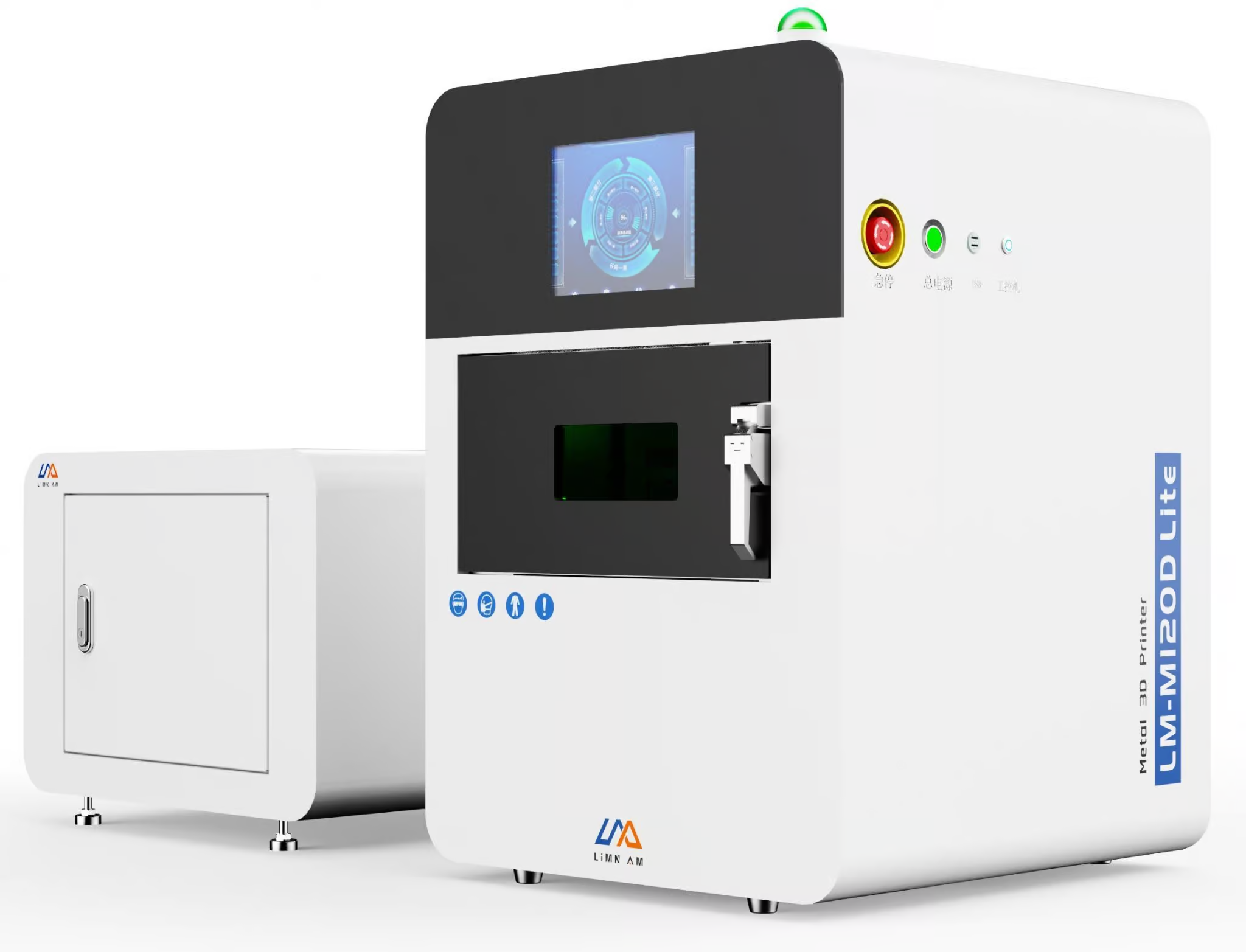
Small metal components are often produced in quantities that make conventional tooling difficult to justify. Some orders require dozens of parts, while others involve recurring demand for several different components. Manufacturers need a production method that can accommodate these quantities without creating unnecessary setup work or unpredictable lead times.
Selective laser melting (SLM) offers one option. By arranging multiple components within a single build, a laser 3D printer can support small-batch production while allowing engineers to manage different part geometries through digital build preparation. The key is to organize each build around the actual order schedule, not simply to maximize the number of parts on the platform.
Arrange Different Components Around the Build Plan
One advantage of metal additive manufacturing is the ability to place multiple compatible parts in the same build. In conventional single-material SLM, different components can share a build when they use the same powder alloy and compatible build settings.
This approach can be useful for OEMs that receive mixed orders or supply several assemblies. Instead of running a separate build for every component type, the production team can assess whether different parts can share a build plate. The decision should account for component dimensions, required quantities, build orientation, support structures, and any restrictions imposed by the qualified process.
Part placement matters as much as part count. Components need sufficient spacing for reliable printing and practical removal after the build. Orientation can affect support requirements, surface quality, and the accessibility of internal features. A layout that fits more parts on paper may create extra work if supports are difficult to reach or components are awkward to separate.
For recurring orders, compare a full build with smaller scheduled batches. A full plate may improve utilization, but waiting to fill it can delay delivery. Smaller batches may leave some build space unused, yet allow parts to enter production sooner and better match assembly schedules. The right choice depends on order frequency, required quantities, and the cost of delaying supply.
Plan Support Removal Before Printing
Support structures help stabilize suitable geometries during metal printing, but they also affect how efficiently a batch can be processed. For small parts, supports may occupy a significant portion of the available space or be difficult to remove without damaging delicate features.
Engineers should therefore review support access during build preparation. Parts with similar support-removal requirements may be practical candidates for the same batch. Components that require different removal tools, extra machining, or special handling may be better placed in a separate build, even if their material requirements are compatible.
This is especially important when a build contains many small components. If each part requires extensive manual work after printing, the time saved by combining them may be reduced. A useful production plan estimates both the printing cycle and the labor needed to separate, clean, and finish the parts.
The objective is not to eliminate all supports or maximize packing density at any cost. It is to create a layout that balances platform utilization with reliable printing and manageable downstream work.
Standardize Layouts for Repeat Orders
Recurring production becomes easier to manage when the team can reuse a validated build strategy. For components ordered regularly, engineers can maintain approved digital files, part orientations, support arrangements, and spacing rules. This reduces the need to plan every order from the beginning.
A standard layout also helps production teams estimate capacity. Once the build configuration and typical cycle time are understood, planners can make more realistic decisions about when to start a job and how many batches are needed to meet a delivery date. Any design or process change should be reviewed before the previous layout is reused.
Standardization allows different build layouts based on production needs. Teams can establish qualified layouts for single-part batches, mixed-part builds, and repeat orders. Each metal 3D printing system should use a build layout validated for the specific part, material, and process configuration.
This approach is particularly useful for suppliers serving OEM customers. Predictable build planning makes it easier to coordinate component availability with assembly requirements and reduces the risk of relying on an unrealistically full production schedule.
Select Equipment Based on the Actual Part Mix
A metal 3D printer machine should be selected based on part dimensions, production volume, and material requirements. Compact systems suit smaller components, while larger systems accommodate bigger parts and varied production needs.
LiMN 3D’s LM-M100D Lite is intended for dental applications. Its published specifications include 300 W and 500 W laser options and a powder layer thickness of 20–60 μm. Buyers should verify the configuration against their requirements.
Machine specifications alone do not determine production capacity. Buyers should assess build area, part layout, material compatibility, cycle time, and support removal. Trial builds can help verify production feasibility.
Evaluate the Whole Batch, Not Just the Plate
A practical evaluation should compare the number of acceptable finished parts with the time and resources required to produce them. A densely packed build may use the platform efficiently, but its value depends on whether the components can be separated, finished, and delivered on time.
For an initial trial, record how many parts fit in the planned layout, how long the build takes, where support removal creates bottlenecks, and whether the components meet their required specifications. Use these results to refine the layout before applying it to repeat orders.
LiMN 3D provides metal 3D printing equipment and related manufacturing support for industrial applications. OEMs and other production buyers can share their component drawings, target quantities, and delivery requirements with LiMN 3D to discuss a suitable production approach.
Effective small-part batch production is a scheduling and layout problem as much as a printing task. By grouping compatible components, planning support access, and maintaining validated build layouts, manufacturers can balance equipment utilization with the need for dependable delivery.
