

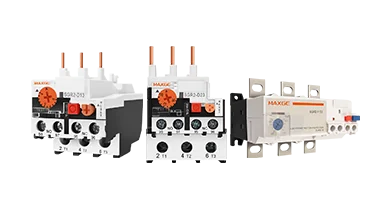
Motor failure can interrupt production, increase maintenance costs, and affect the reliability of an entire electrical system. While motors are designed to operate under demanding conditions, prolonged overload, excessive current, or phase-related issues can cause winding temperatures to rise beyond safe levels. For this reason, selecting appropriate motor protection equipment is an important part of electrical system design.
A thermal overload relay is commonly used with a contactor to provide thermal overload protection for motors. As part of a broader range of electrical control products, it helps monitor motor current and disconnect the control circuit when an overload condition persists. Understanding how this protection works can help equipment designers, installers, and maintenance teams build safer and more dependable motor control systems.
What Is a Thermal Overload Relay?
A thermal overload relay is a protective relay electrical device designed to respond to excessive motor current over a period of time. Unlike a short circuit, which can cause an immediate and very high current spike, motor overload conditions may develop gradually. This can happen when a motor is mechanically overloaded, starts under excessive load, or operates under abnormal conditions for an extended period.
The relay uses the relationship between current and heat to detect an overload. When current exceeds the set operating range for long enough, the thermal mechanism activates the relay contacts. These contacts can interrupt the control circuit of a motor contactor, stopping the motor before prolonged overheating causes serious damage.
This makes thermal protection particularly useful for applications where motors must operate continuously and reliably.
Why Thermal Overload Protection Matters for Motors
Motor windings generate heat during normal operation. When current rises above the motor’s rated operating level, heat generation also increases. If this condition continues, insulation can deteriorate and motor components can experience unnecessary thermal stress.
Thermal overload protection provides a way to respond to these conditions without requiring an immediate trip for every temporary current increase. This is important because motors naturally draw higher current during startup. A properly selected overload relay can distinguish between normal starting conditions and sustained overload conditions.
For equipment operators, the benefit extends beyond protecting the motor itself. Preventing avoidable motor damage can reduce unexpected downtime, maintenance requirements, replacement costs, and interruptions to connected equipment.
How a Thermal Overload Relay Works With a Contactor
A typical motor control circuit uses a contactor together with an overload relay. The contactor controls the connection between the power supply and the motor, while the thermal overload relay monitors the motor’s operating current.
When the motor operates within its expected current range, the control circuit remains closed and the contactor keeps the motor energized. If the motor experiences a sustained overload, the thermal element inside the relay responds to the increased current and heat. Once the relay reaches its trip condition, its auxiliary contact changes state and causes the contactor to open.
This arrangement separates the switching function from the protection function. The contactor provides motor switching and control, while the overload relay provides thermal protection. Together, they form a practical motor control arrangement for many industrial and commercial applications.
Choosing a Thermal Overload Relay 3-Phase Application
Three-phase motors are widely used in pumps, compressors, fans, conveyors, machine tools, and other electrically driven equipment. For these systems, selecting a suitable thermal overload relay 3-phase configuration requires attention to the motor’s rated current, operating conditions, control arrangement, and electrical specifications.
The overload setting should correspond appropriately to the motor’s rated operating current rather than simply selecting a relay based on the physical size of the motor. Ambient temperature, starting conditions, duty cycle, and expected load should also be considered during selection.
It is equally important to ensure compatibility between the overload relay and the contactor. Correct matching helps the motor control circuit operate as intended and simplifies installation and maintenance.
Thermal Protection as Part of Electrical Control Products
Motor protection rarely depends on a single device. A reliable electrical system may combine circuit breakers, contactors, overload relays, control switches, protective devices, and distribution equipment according to the application’s requirements.
MAXGE provides a range of electrical control products covering different aspects of low-voltage power distribution and industrial control. Its industrial device portfolio includes AC contactors, thermal relays, magnetic starters, motor protecting circuit breakers, control switches, time relays, and fuse bases. The company describes its thermal relay as a motor overload protection device that monitors temperature and current and is commonly used with contactors.
This broader product structure can make it easier to consider motor control and protection as part of an integrated electrical system rather than treating each component as an isolated product.
What to Consider Before Selecting Motor Protection Equipment
Before choosing a thermal overload relay, it is important to identify the motor’s rated current and voltage, phase configuration, starting characteristics, load type, and expected operating environment. The protection device should also be compatible with the contactor and control circuit used in the application.
For equipment that operates continuously or under variable loads, protection settings should be evaluated carefully. Incorrect settings may result in unnecessary trips or insufficient protection. Installation quality is also important because loose connections, incorrect wiring, and unsuitable components can affect system performance.
Technical documentation should therefore be reviewed before installation, especially when integrating protection devices into a new control panel or replacing existing equipment.
Building More Reliable Motor Control Systems
Effective motor protection is ultimately about controlling risk before a minor electrical abnormality develops into a costly equipment problem. A properly selected thermal overload relay can provide an important layer of protection by responding to sustained overload conditions and helping prevent excessive motor heating. Its selection should be considered together with motor current, starting conditions, control mode, ambient temperature, and the requirements of the overall protection strategy.
For applications that require coordinated motor control and protection, selecting compatible control and protection devices can simplify system integration. In industrial lines, for example, motor protection may need to work together with contactors, circuit protection, and control components. Similar considerations apply to equipment used in new energy facilities, production machinery, and other applications where motors operate under varying load conditions.
MAXGE develops electrical control solutions for industrial and new energy applications, supporting different requirements for motor switching, overload protection, and equipment control. Its broader low-voltage product range allows motor-related protection and control functions to be considered as part of the wider electrical system rather than as separate components.
When you need information about thermal overload relays, contactors, motor protection devices, or other electrical control products, you can contact MAXGE for product and application support.
