

For fleet operators, charging costs are rarely limited to the electricity consumed by each vehicle. Labor, site utilization, installation requirements, maintenance, vehicle downtime, and charging schedules all influence the operating budget.
The challenge becomes more visible when a business electrifies several vehicles rather than one or two. A charging strategy that fits a single car may create congestion or unnecessary infrastructure costs at fleet scale.
This is where an appropriately selected AC fast charger can become useful. For vehicles that remain parked for several hours, AC charging can provide a practical balance between charging capacity and infrastructure investment.
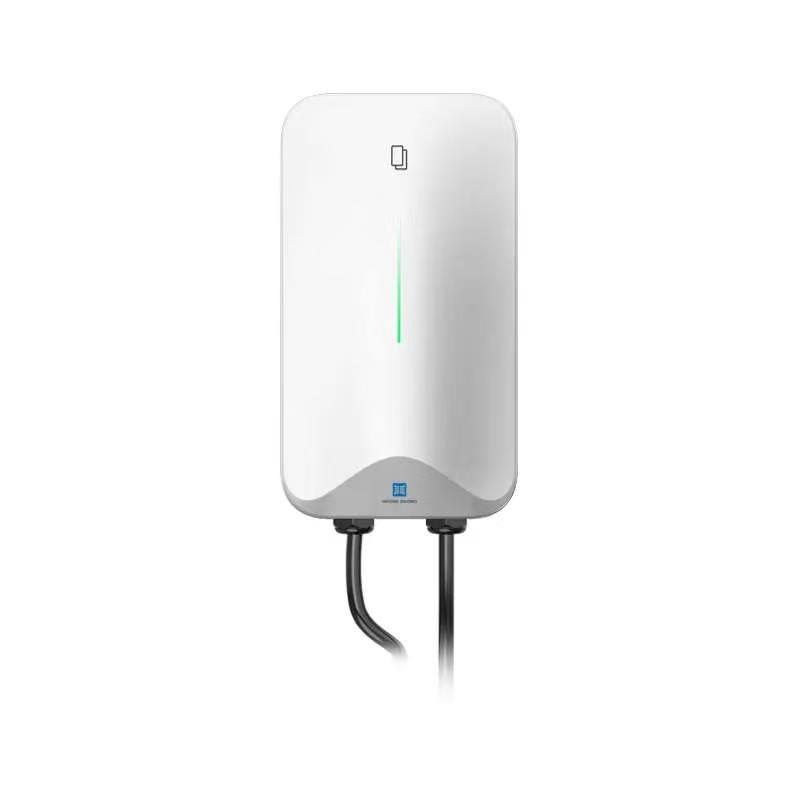
INFORE ENVIRO offers AC wallbox products from 7kW to 22kW, including a model range that can serve residential parking as well as selected commercial applications.
Match Charging Speed With Vehicle Dwell Time
Fleet managers do not need maximum charging power for every vehicle. A delivery van that returns to the depot in the evening and leaves the next morning has a long charging window.
A company car may remain parked throughout the workday. In these cases, the useful question is not simply how quickly the charger can deliver energy, but whether the available power fits the vehicle’s schedule.
The U.S. Department of Energy notes that Level 2 charging is widely used in workplace environments and that one connector can serve more than one vehicle in a day, depending on usage patterns. This makes AC charging relevant to fleets where vehicles have predictable dwell periods.
The Vela series from INFORE ENVIRO provides 7kW, 11kW, and 22kW configurations. Its specification lists single-phase charging up to 7kW/32A and three-phase charging at 11kW/16A or 22kW/32A.
The unit uses the IEC 62196-2 Type 2 connector and can be wall- or pole-mounted. For fleet applications with longer parking periods, choosing a suitable output level can help avoid paying for more charging capacity than daily operations require.
Reduce Pressure on Peak Electrical Demand
Electric fleet charging can place a noticeable load on a commercial building. If several vehicles begin charging as soon as they return, charging demand can overlap with HVAC, lighting, refrigeration, production equipment, or other facility loads.
The Department of Energy identifies unmanaged charging as a potential source of higher energy costs, demand charges, and infrastructure upgrade requirements. Managed charging can shift charging activity toward lower-cost periods and coordinate EV demand with building loads.
This means an efficient fleet strategy should consider charging schedules, not just charger wattage. A 7kW or 11kW AC unit operating during a long overnight window can be more suitable for some vehicles than installing high-power DC equipment across the entire site. The right comparison depends on vehicle departure times, daily mileage, electricity pricing, and available electrical capacity.
Keep Fleet Vehicles Moving Without Overbuilding Infrastructure
High-power charging has a clear role when vehicles must return to service quickly. Yet not every fleet operates under that condition. Businesses can often divide vehicles by duty cycle. Vehicles with predictable overnight parking can use AC chargers, while vehicles with short turnaround times can be assigned to higher-power charging equipment.
That approach can reduce the number of high-power charging points required at a site. It also gives operators more flexibility when expanding a fleet. INFORE ENVIRO offers both AC and DC charging equipment, with its broader portfolio covering products from 7kW AC wallboxes to high-power DC systems.
For a business looking for the best home EV charger for employee or take-home fleet vehicles, the selection criteria can be similar. A home-based fleet driver may park overnight for many hours, making a compact Level 2 wallbox a practical option. The same principle applies to company parking areas where vehicles are stationary for most of a shift.
Consider Maintenance and Remote Connectivity
Fleet charging costs also include the time spent dealing with faults. When a charging issue repeatedly requires physical inspection, maintenance labor can increase and vehicles may lose access to the expected charging window.
The Vela series includes optional Bluetooth, Wi-Fi, 4G, and Ethernet connectivity, with Plug & Charge, RFID, and app-based startup options. Its specifications also list protection against over-temperature, overcurrent, over- and under-voltage, leakage, surge, grounding, short circuit, lightning, and CP faults. The enclosure rating is IP55 for the socket version and IP65 for the cable version, while mechanical protection is rated IK10.
These specifications do not remove the need for suitable installation and maintenance procedures, but they give fleet buyers concrete parameters to review when comparing equipment for real operating environments.
Build a Cost Model Around the Fleet, Not the Charger
A useful fleet charging calculation should start with vehicle schedules. Managers can estimate average daily energy demand, parking duration, available electrical capacity, electricity tariffs, and the number of simultaneous charging sessions. From there, they can decide how many AC points are needed and where higher-power chargers add operational value.
For B2B buyers, supplier capability is another part of the decision. INFORE ENVIRO presents itself as an EV charging manufacturer with AC, DC, fleet, residential, destination, and OEM/ODM offerings, allowing businesses and channel partners to evaluate different charging configurations through one product portfolio.
The strongest cost-efficiency strategy is rarely based on choosing the highest-rated charger for every parking space. It is more often about matching charging power to duty cycles, controlling when energy is consumed, and selecting hardware that fits the physical and electrical conditions of the site.
For fleets with predictable parking windows, a properly selected AC charger can therefore contribute to a more balanced charging investment while leaving high-power infrastructure for vehicles that genuinely need rapid turnaround.
