

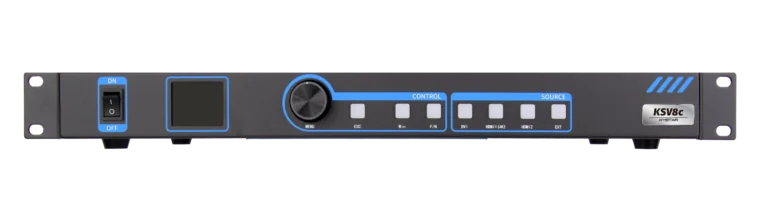
An LED display system requires precise control to transform digital content into clear and synchronized visual images. While LED modules and cabinets create the physical display surface, the equipment responsible for managing image signals determines how effectively the screen performs. Among these essential components, the LED video processor plays a key role in signal conversion, image optimization, and display management.
Many customers focus mainly on LED screen size, resolution, and pixel pitch when planning a project. However, the processing system behind the screen is equally important because it directly influences image quality, operational flexibility, and overall system stability.
From stage backgrounds and commercial LED walls to XR virtual production environments and large-scale installations, an advanced processor helps ensure that content is displayed accurately and smoothly. Kystar develops professional LED control solutions, including integrated video processing products designed to simplify LED system management and improve display performance.
What Is an LED Video Processor?
An LED video processor is a professional device that receives video signals from different sources, processes the image data, and prepares it for output to an LED display system.
Unlike conventional monitors or televisions, LED displays are made up of many individual modules and cabinets that must work together as one large image surface. The processor helps adapt incoming signals to match the specific requirements of the LED screen, including resolution, layout, and display configuration.
In a typical LED project, content may come from computers, cameras, media servers, or broadcast systems. The processor receives these signals and manages how they appear on the LED display. It can adjust image size, optimize signal quality, and control how different sources are presented.
Kystar’s integrated LED video processing solutions combine video processing and sending functions in one device, helping reduce system complexity while providing efficient control for professional LED applications.
How Does an LED Video Processor Work?
The working process of an LED video processor begins when it receives input signals from external video equipment. These signals may come in different formats and resolutions, so they cannot always be displayed directly on an LED screen.
The processor analyzes the incoming content and converts it into a format that matches the LED display requirements. During this process, it manages important tasks such as scaling, signal switching, image adjustment, and data distribution.
For example, a large LED stage screen may receive live camera feeds, playback videos, and computer-generated graphics at the same time. The processor organizes these sources and ensures that the correct content appears in the right position with smooth transitions.
After processing, the image data is transmitted to the LED control system and then delivered to the display modules. This allows thousands or even millions of pixels to operate together as a unified visual surface.
Improving Image Quality Through Signal Processing
One of the most important functions of an LED video processor is improving the quality of the displayed image.
Different video sources often have different resolutions and aspect ratios. Without proper processing, content may appear stretched, blurry, or incorrectly positioned. The processor adjusts the image to fit the LED display while maintaining visual clarity.
Advanced processors can also help improve brightness consistency, color accuracy, and image stability. These functions are especially valuable for professional environments where audiences expect high-quality visuals.
For example, in a broadcast studio or live event, a poor-quality signal conversion process can create noticeable differences between camera feeds and graphic content. A reliable processor helps maintain consistent output across the entire LED screen.
Kystar’s KLSxC series supports advanced video processing functions, including multiple input management, flexible layout control, and multi-layer image processing for complex LED display scenarios.
Managing Multiple Content Sources and Screen Layouts
Modern LED displays are often used for applications that require more than simple video playback. Large venues may need to display multiple sources simultaneously, such as presentations, live feeds, advertisements, and data information.
An LED video processor allows operators to manage these different sources more efficiently. Instead of using separate equipment for every signal, users can control multiple inputs and arrange content according to project requirements.
This capability is particularly useful in environments such as conference halls, command centers, and entertainment venues. A single LED wall may need to display different content windows while maintaining a unified visual appearance.
For creative LED installations, flexible layout control is also important. Designers can create customized screen compositions by adjusting content positions, sizes, and layers.
Kystar’s video controllers support multi-layer layouts, allowing operators to scale, overlap, and arrange different visual elements across the LED canvas for more flexible display management.
Why Large LED Projects Need Professional Video Processing?
As LED screens become larger and more creative, the requirements for signal management become more demanding.
A small indoor display may only need basic processing functions, but large-scale LED projects often involve higher resolutions, multiple inputs, and complex installation structures. Without suitable processing equipment, problems such as signal delay, image distortion, or inconsistent display performance may occur.
Professional LED video processors are designed to handle these challenges. They provide the processing capacity needed for large pixel loads and help maintain synchronization across the entire display.
In applications such as concerts, sports venues, and XR studios, real-time performance is especially important. The processor must respond quickly to changing content while keeping the image stable.
Kystar’s integrated video processors are designed for professional LED environments, supporting applications such as stage backgrounds, exhibition spaces, conference rooms, shopping malls, and creative LED displays.
LED Video Processor vs. Traditional Video Equipment
A common question among customers is why an LED display needs a dedicated processor instead of using ordinary video equipment.
The main difference is that LED video processors are specifically designed for the characteristics of LED displays. Traditional video devices may output images, but they often lack the specialized functions needed for large LED systems.
LED displays require precise pixel management, flexible scaling, signal synchronization, and compatibility with LED control hardware. A dedicated processor provides these functions and helps ensure reliable operation.
For professional projects, the processor is not simply a signal converter. It is the central management device that connects content sources with the LED display system.
How to Choose the Right LED Video Processor ?
Selecting the correct processor depends on the requirements of the LED project.
The first consideration is the display size and resolution. Larger screens require stronger processing capability to handle higher amounts of image data.
The second consideration is the number and type of input sources. Projects using multiple cameras, computers, or media systems need processors with flexible input management.
The third consideration is the application environment. A retail display may prioritize simple operation, while a stage production or XR project may require advanced control functions and real-time adjustments.
A suitable processor should not only meet current project requirements but also provide enough flexibility for future upgrades.
The LED Video Processor Is the Core of Display Control
An LED video processor is a critical component that connects video sources with LED display systems. It manages signal conversion, image optimization, content arrangement, and display synchronization to ensure high-quality visual performance.
For simple displays and complex immersive environments alike, the processor determines how effectively an LED screen can present content.
As LED technology continues to develop, professional processing solutions become increasingly important for achieving reliable, flexible, and visually impressive results. With advanced LED control technologies, Kystar helps customers build efficient display systems for commercial, entertainment, and creative applications.
