

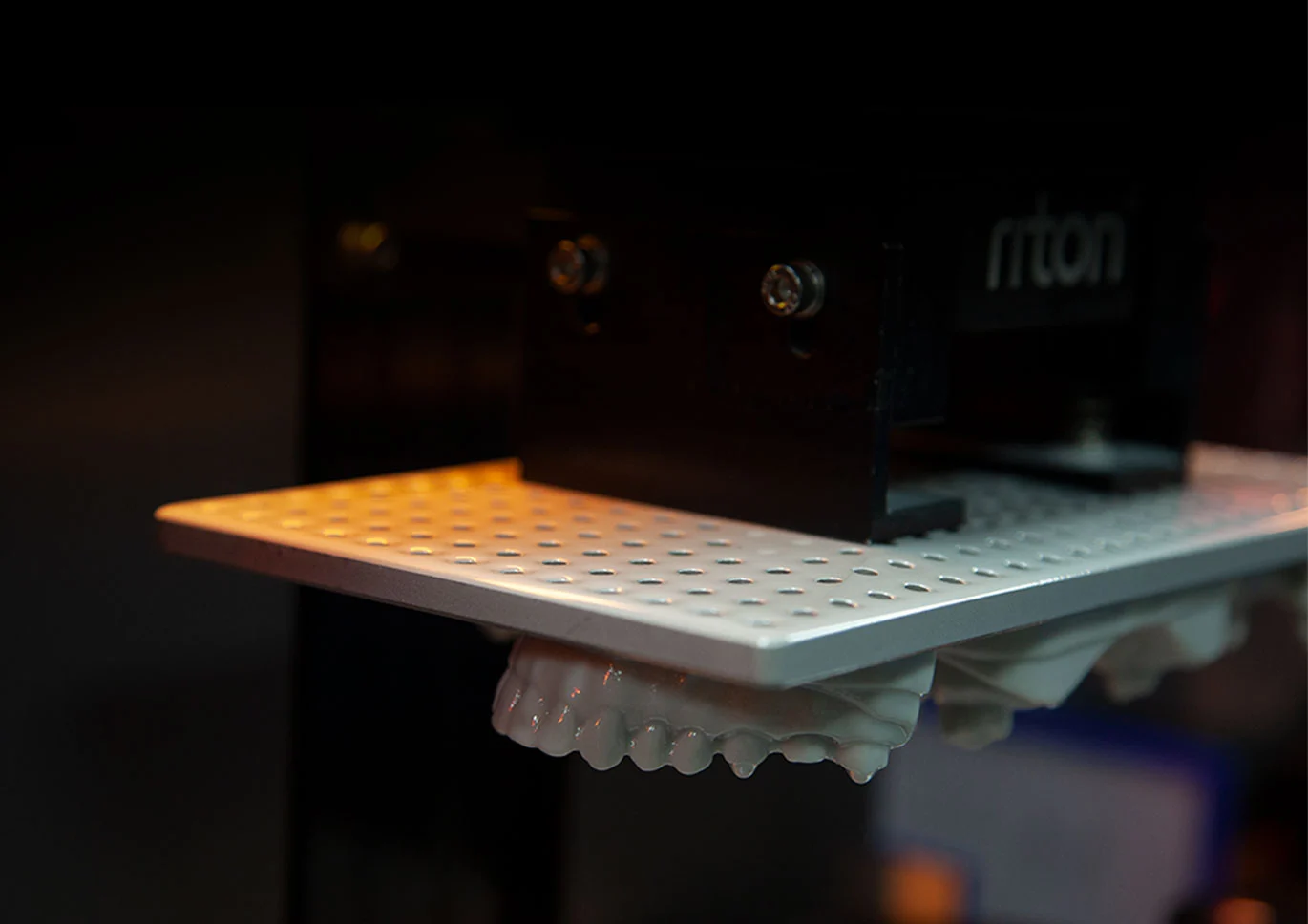
Modern dental laboratories and clinical practices operate under intense pressure to deliver exceptional accuracy. Restorative crowns, multi-unit bridges, clear aligners, and implant guides require micro-scale precision. Deviations along prep margins lead to costly remakes and wasted chairside time.
Digital workflows depend heavily on the physical accuracy of output devices. As additive technology advances, dental professionals closely evaluate optical performance. Higher screen resolution directly influences how accurately complex CAD files translate into physical working models.
Ultra-high-resolution 8K screens have emerged as a leading standard in light-curing additive manufacturing. However, laboratory directors often question whether this technical upgrade yields genuine, measurable improvements in everyday clinical applications and production workflows.
Understanding Light Masking in an LCD Resin 3D Printer
An advanced LCD resin 3D printer combines a UV LED light array with a high-resolution liquid crystal masking system to cure complete resin layers simultaneously, improving printing efficiency while maintaining consistent detail across the build area.
Simultaneous exposure provides exceptional speed when producing multiple dental dies or full arches in single batches. Because entire layers cure at once, adding extra parts to the build platform does not increase overall print times for busy laboratories.
However, physical model accuracy depends heavily on individual pixel dimensions. Coarser pixels create noticeable stair-stepping along curved anatomical surfaces, compromising margin lines, crown seats, and delicate contact points without extensive manual finishing.
How an 8k 3D Resin Printer Transforms Accuracy
Upgrading to an 8k 3D resin printer addresses pixelation by dramatically increasing display pixel density. Packing millions of pixels onto a specialized monochrome panel reduces individual XY pixel sizes down to 30 microns for micro-scale detail reproduction.
Micro-scale pixel dimensions prevent unwanted light diffusion at critical margin boundaries. Dental technicians achieve crisp cervical margins, reducing rounded edges and light bleed that could otherwise cause seating errors in restorative crown and bridge cases.
High pixel density also improves surface smoothness on master models used for clear aligner thermoforming. Removing visible layer steps ensures aligner sheets fit dentition precisely, preventing friction points and ensuring comfortable, predictable orthodontic movement.
Furthermore, high-resolution printing enhances friction fits for removable die models. Precise contact surfaces ensure dies snap securely into place and maintain complete structural stability during intricate porcelain adjustments and composite finishing procedures.
Technical Excellence of the RXDent-L230
Translating optical resolution into consistent physical accuracy requires industrial mechanical engineering. Developed by Riton, the RXDent-L230 demonstrates how advanced 8K optical engines optimize daily production routines in modern dental manufacturing facilities.
The unit features an 8K monochrome display boasting a 7680 × 4320 resolution. With 30μm accuracy and 8x anti-aliasing technology, it reproduces microscopic anatomical contours with exceptional fidelity across every build cycle.
Featuring a 228 × 128 × 150 mm build volume, the RXDent-L230 supports high-capacity mass production. Dental studios can nest more crown preps or arch models together without suffering dimensional distortion near platform edges.
Rapid printing times of 1 to 8 seconds per‑layer accelerate operational turnaround. Meanwhile, adjustable layer thickness settings between 0.01 and 0.2 mm allow technicians to balance surface finish with fast production demands.
Light distribution exceeding 90% uniformity supports consistent polymerization across the entire build platform. This uniform energy delivery reduces peripheral warping, delivering repeatable dimensional accuracy and consistent mechanical properties across every print batch.
Operational Advantages and Material Versatility
Implementing high-resolution printing elevates overall laboratory efficiency and profit margins. Reducing dimensional variance minimizes remake rates, saving valuable technician labor and preventing frustrating clinical delays during patient chairside appointments.
Smooth surface finishes directly reduce manual grinding and bench adjustments. Technicians spend less time correcting model defects, allowing lab staff to focus on high-value aesthetic staining, glazing, and detailed ceramic layering.
Precise light projection also optimizes material performance across diverse photopolymer formulas. The RXDent-L230 delivers predictable curing results for model resins, castable materials, and biocompatible formulas used in implant surgical guides.
Proprietary RTware software streamlines pre-processing by automating file preparation and slicing. Intelligent algorithms optimize support placement, preventing file translation errors and minimizing expensive resin consumption during complex printing jobs.
Service Infrastructure and Global Support
Sustainable industrial performance relies on comprehensive service frameworks behind the hardware. Riton brings decades of expertise in laser and additive engineering, providing end-to-end support for dental facilities transitioning to digital workflows.
Experienced application engineers provide pre-sales setup guidance, evaluating lab capacity to ensure smooth hardware integration. Post-sales technical support delivers timely software updates, remote diagnostics, and routine maintenance to maximize machine uptime.
A global distributor network ensures localized service availability across international markets. Local representatives supply genuine spare parts, deliver staff training, and provide prompt physical maintenance to safeguard long-term capital investments.
Delivering Clinical Excellence Through 8K Resolution
Investing in an 8k 3D resin printer represents a proven strategy for expanding dental manufacturing capabilities. Combining microscopic pixel density with robust mechanical drive systems guarantees consistent, micron-level clinical accuracy.
Incorporating an advanced LCD resin 3D printer enables laboratories to meet rising restorative demands effortlessly. High optical fidelity reduces guesswork, ensuring physical output matches digital designs with complete anatomical fidelity.
Through innovative engineering and dedicated global support, Riton empowers dental professionals worldwide. Transitioning to high-resolution 8K printing establishes a reliable foundation for continuous growth, operational efficiency, and clinical success.
