

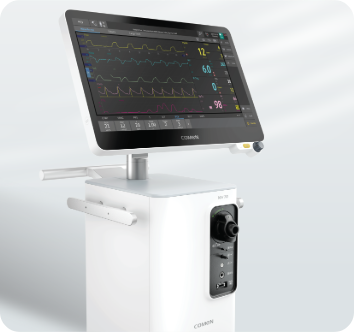
Clinicians require precise technology to manage respiratory failure across diverse patient demographics, from neonates to adults. When evaluating a hospital ventilator, procurement teams must prioritize devices that offer both invasive and non-invasive ventilation modes to ensure clinical flexibility. These machines serve as a lifeline in intensive care units, demanding high levels of reliability and adaptability. By analyzing technical parameters such as tidal volume range and trigger sensitivity, a facility ensures that their chosen ventilator machine can meet the specific physiological needs of every individual in their care.
Advanced Ventilation Modes and Clinical Versatility
Modern respiratory support necessitates a wide array of delivery options to handle complex clinical scenarios like ARDS or chronic obstructive pulmonary disease. They find that a high-quality hospital ventilator often includes specialized modes such as DuoLevel, APRV, and PRVC, which help in synchronizing the breath delivery with the patient’s natural efforts. COMEN designs their systems to transition smoothly between these modes, reducing the risk of lung injury. Furthermore, the ability of a ventilator machine to provide high-flow oxygen therapy (HFNC) adds an extra layer of utility, allowing the clinical staff to manage patients who may not yet require full intubation.
Monitoring Capabilities and User Interface Design
Real-time data visualization is crucial for making informed bedside decisions during critical care maneuvers. Every hospital ventilator should feature a high-resolution display that shows pressure-volume loops and flow-time waveforms clearly. These visual aids allow therapists to detect patient-ventilator asynchrony immediately. When they operate a ventilator machine, the interface should be intuitive enough to allow for rapid setting adjustments during emergencies. Integration with hospital information systems for seamless data export is another specification that enhances the efficiency of the medical team and ensures accurate patient record-keeping.
Portability and Power Management Systems
Operational continuity during internal hospital transfers is a vital factor that influences the safety of critically ill patients. A robust hospital ventilator must include an internal battery with sufficient capacity to operate during transport or in the event of a power failure. They look for units that are lightweight yet durable, with secure mounting options for various trolley types. Additionally, the ventilator machine should have efficient gas consumption patterns to maximize the duration of mobile oxygen cylinders. This focus on mobility ensures that the respiratory support remains uninterrupted as the patient moves between the emergency room, imaging department, and the intensive care unit.
Selecting the right respiratory equipment involves a thorough assessment of technical performance, ease of use, and transport capabilities. A well-specified hospital ventilator provides the foundation for successful weaning protocols and improved patient outcomes. When hospitals invest in versatile ventilator solutions—such as those offered by COMEN—they empower their staff with the tools necessary to handle fluctuating patient volumes and complex respiratory pathologies. Focusing on these core specifications allows medical institutions to maintain a high standard of care while optimizing their long-term equipment investments.
