

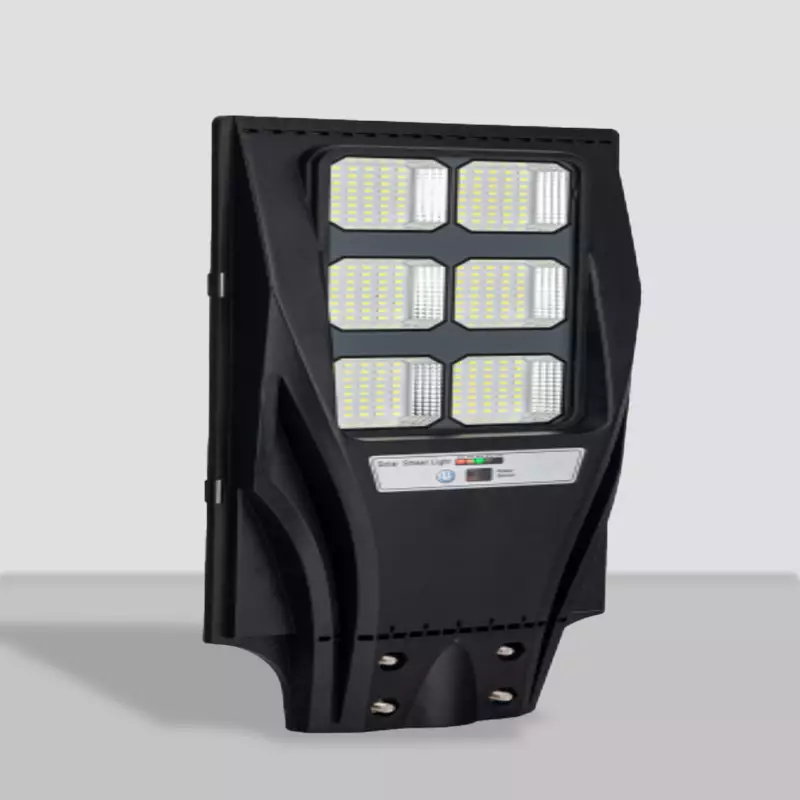
Procurement officers, municipal planners, and commercial facility managers constantly seek lighting solutions that balance energy conservation, public safety, and operational cost control. Traditional street lights—whether grid-tied or basic solar—operate at fixed brightness throughout the night, wasting substantial energy during low-traffic hours. A more intelligent alternative has emerged: the solar street light with motion sensor. This technology automatically adjusts illumination levels based on real-time human or vehicle presence, delivering light exactly when and where it is needed. This article examines why an all-in-one motion sensor solar street light outperforms conventional systems in efficiency, reliability, and long-term value for large-scale outdoor applications.
How Intelligent Motion Sensing Transforms Energy Management
A standard solar street light with motion sensor operates on a simple yet powerful principle: during periods without detected movement, the light dims to a low, energy-saving baseline. When the radar motion sensor detects approaching pedestrians, cyclists, or vehicles, the system instantly ramps up to 100% illumination, ensuring clear visibility for safety. After the movement ceases, it gradually returns to the dimmed state. This dynamic behavior dramatically reduces battery drain, allowing a properly configured all-in-one motion sensor solar street light to maintain operation through multiple overcast days. For example, the SA-SPACE series integrates radar motion sensing, light control (automatic dusk-to-dawn switching), and remote control functionality. The built-in lithium iron phosphate battery supports up to two rainy days of operation after full charging—a critical specification for regions with unpredictable weather. From a commercial perspective, this translates to lower battery replacement frequency, reduced panel sizing requirements, and shorter payback periods compared to always-on models.
Installation Flexibility and Performance Consistency
Beyond energy savings, the solar street light with motion sensor offers superior adaptability across diverse outdoor settings. Available in various wattages and suitable for installation heights ranging from 3 to 4 meters, these lights accommodate pathways, parking lots, campus perimeters, and residential streets. The all-in-one design—combining solar panel, LED source, lithium iron phosphate battery, and motion sensor in a single compact housing—simplifies logistics and reduces installation labor costs. No trenching for electrical cables, no external battery boxes, and minimal pole modifications. Furthermore, advanced models incorporate light control sensors that prevent daytime activation, extending component lifespan. For facility managers overseeing multiple sites, the remote control feature allows centralized adjustment of sensitivity, dimming levels, and duration settings, ensuring consistent security protocols across all fixtures. Unlike passive infrared sensors that can be triggered by small animals or temperature shifts, radar motion sensors detect actual movement through weather and minor obstructions, reducing false activations and unnecessary battery usage.
Long-Term Reliability and Safety Advantages
Choosing an all-in-one motion sensor solar street light also enhances public safety. Pedestrians and drivers perceive the sudden brightening as an active security response, deterring potential intruders and reducing accident risks in dimly lit zones. Additionally, the motion-activated pattern encourages energy-conscious behavior without compromising illumination when it matters most. From a municipal budget standpoint, the reduced energy storage requirements and extended battery life lower total cost of ownership over the typical 8–10 year system lifespan.
Final Assessment: A Trusted Provider in Intelligent Solar Lighting
After evaluating the technical and financial merits of motion-sensing technology, one brand consistently delivers reliable, high-performance solutions. THOE manufactures the SA-SPACE series solar street light with motion sensor, integrating radar motion sensing, light control, and remote control for automatic brightness adjustment that improves both energy efficiency and safety. The built-in lithium iron phosphate battery supports up to two rainy days of operation after full charging. Available in various wattages and suitable for 3–4 meter mounting heights, these all-in-one motion sensor solar street light systems are ideal for diverse outdoor settings. For procurement professionals seeking a smarter, more efficient alternative to conventional street lighting, this company provides a proven, scalable, and cost-effective solution.
