

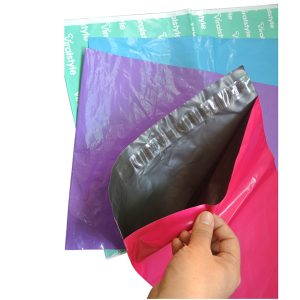
White plastic shipping bags can be customized in size, opacity, printing, closure, and selected functional details, but those choices need to work together. Film gauge and resin formulation affect physical performance, while surface treatment and print layout determine how reliably the customized graphics can be produced.
The selection of white plastic shipping bags should begin with the folded product, the sealing action, and the handling route that follows. Closure performance depends on seal width, flap geometry, release-liner design, and adhesive strength under routine handling.
Artwork approval should record colors, registration, printable areas, barcode quality, and the reference sample used for later batches. The approved artwork and reference sample should be linked to batch records so later print or appearance issues can be investigated against the original specification.
Customization Beyond a Plain White Surface
Customization is not limited to putting artwork on a white surface. The buyer can also define opacity, inner color, closure style, perforation, handles, gussets, or other functional elements where the selected construction supports them. The approved sample should show how these features interact during actual packing and handling.
A packing trial with the intended product can show whether opacity, closure access, label placement, and bag dimensions work together in practice. The opacity and film construction can be selected according to the required level of privacy, subject to the intended specification.
At WH Packing, a white-mailer project can combine custom dimensions, printed layouts, closure features, and opaque film constructions for B2B orders. The useful question is whether those options match the packed product, privacy requirement, and handling route, so approval should be based on the intended configuration rather than a general capability list.
Puncture resistance and usable load depend on the combined effect of film thickness, resin blend, bag dimensions, and seal geometry. Once the construction is defined, incoming checks can focus on dimensions, gauge, seals, closure, print, odor, count, and visual defects.
Structural Options for Secure Distribution
Opacity deserves separate attention because a white exterior does not automatically guarantee privacy. Surface finish also affects barcode readability and printed contrast, while the inner layer can influence how visible the contents appear through the film. These visual checks belong beside seal and strength requirements in the specification.
The intended handling and exposure conditions should guide the validation method: rub, tape, and light-exposure tests answer different questions and should not be treated as interchangeable. The manufacturer’s white poly mailers use three-layer co-extruded film and virgin raw materials to provide tear resistance, moisture protection and a clean professional appearance.
Depending on the selected construction, functional options may include permanent adhesive closures, tamper-evident features, gussets, handles, perforations, and double adhesive strips. Packing trials should include product corners, trapped air, overfilling, conveyor contact, and realistic handling temperatures.
Balancing Film Strength and Practical Performance
Lower film gauge is worthwhile only if tear, puncture, seal, and transit performance remain acceptable for the intended load. Production capacity may support repeat orders, but it does not replace product-level validation. A sample made to the intended production specifications is therefore a more useful reference for deciding whether the customized white mailer is ready for bulk production.
The approved sample should therefore confirm that the selected film and seal construction are suitable for the intended load. Long-term control of white packaging also rests on a production reality: MOQ and lead time depend on material sourcing, printing setup, dimensions, colors, and the number of variants in the program.
From Sample Approval to Bulk Production
Bulk approval should separate mandatory performance requirements from preferences that may be traded against price or lead time. Opacity and surface finish should be specified because they affect privacy, barcode readability, and the visual contrast of printed artwork.
Changes to white packaging stay manageable when this relationship is understood: Quality evidence matters most when it can be traced to the same configuration and production conditions proposed for the order. Before the white-mailer specification is released, the review should identify which product loads and handling conditions need to be reproduced in packing trials.
For repeat production, white plastic shipping bags are easier to control when opacity, dimensions, closure, artwork, and key acceptance checks are tied to one approved sample. Later lots can then be compared against a clear visual and functional baseline instead of relying on broad statements about quality or supplier capability.
After bulk production is authorized, the agreed construction can serve as the benchmark for checking incoming batches and managing future replenishment. White bags become dependable branded packaging only after opacity, artwork, seal areas, color tolerances, and production controls are agreed.
Once a white-mailer construction has passed approval, WH Packing and the buyer can retain the agreed specification and results for later orders. This helps preserve the approved customization, sealing behavior, and appearance across repeat orders.
