

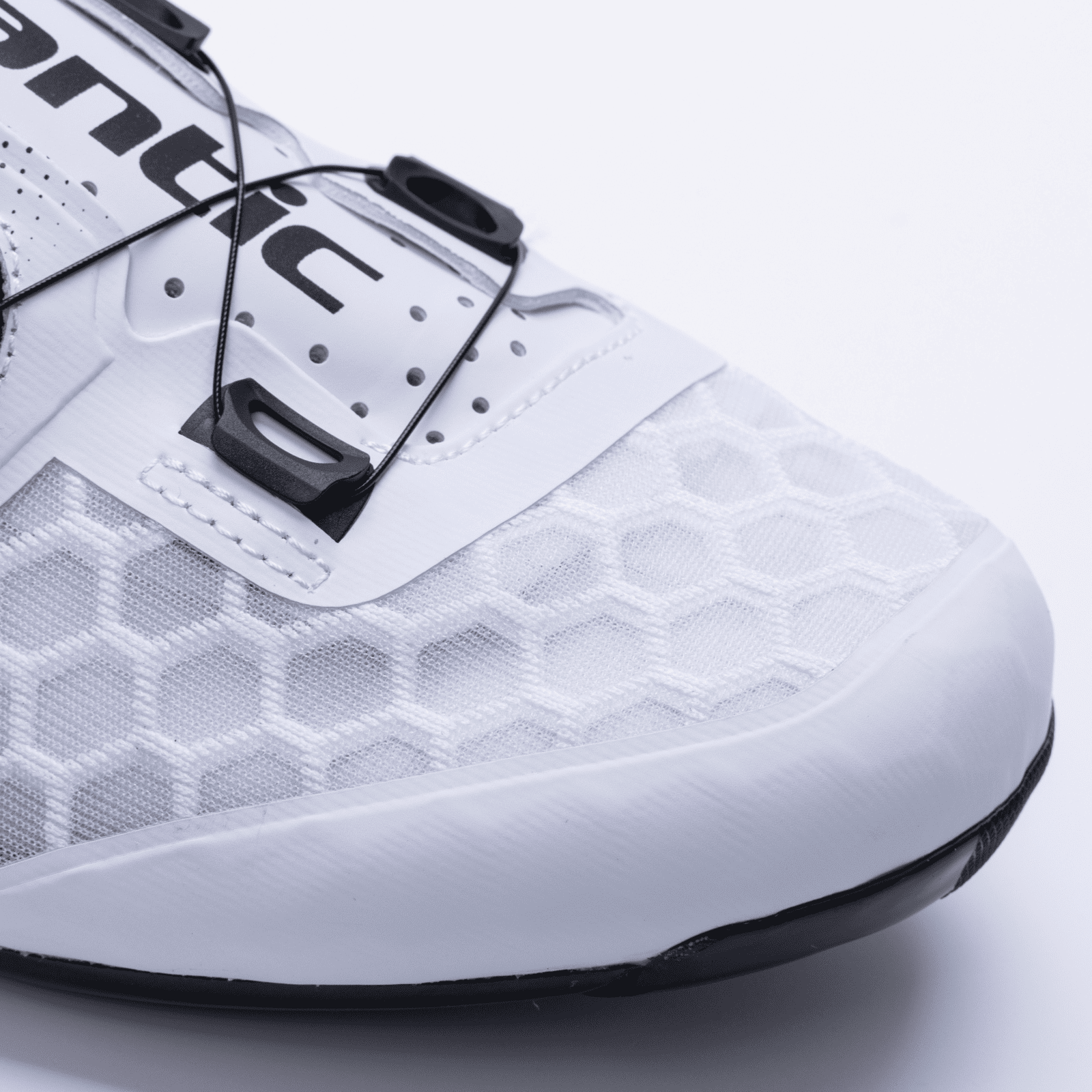
Using recycled material in a cycling shoe is not as simple as substituting one fabric for another. A flat-pedal shoe contains several parts that perform very different jobs: rubber creates the pedal and ground-contact surface, structural elements control flex, the upper manages fit and ventilation, reinforcement protects high-wear areas, and the closure holds the foot over the platform.
Recycled content can therefore enter only where its verified properties match the function of the component being replaced. Traceability also matters, because an environmental claim is meaningful only when the material source and production batch can be documented.
The manufacturing question is consequently broader than “Can recycled fabric be used?” It is whether recycled input can be integrated without blurring the distinction between textile performance, outsole structure, fit consistency, and the demands of repeated cycling use.
A Cycling Shoe Is a Material System, Not a Single Material
Flat-pedal construction already combines materials with sharply different responsibilities. Rubber is used where the shoe needs traction and walking practicality; TPU can add reinforcement or shank support; PU, microfiber, and mesh can form different kinds of uppers; and carbon-related components can be introduced when greater structural rigidity is required.
A shoe size chart sits outside that material stack, but it is still part of manufacturing consistency because the finished last, upper volume, and internal dimensions have to correspond to the dimensions assigned to each size. Changing a textile or reinforcement without controlling shape can alter fit even if the nominal size label stays the same.
In flat-pedal cycling shoes, material choices remain tied to fit geometry, pedal contact, structural support, and walking practicality. The construction may combine a rubber outsole, reinforcement, upper protection, and controlled flex, with each component serving a distinct function.
A recycled upper textile, for example, would not automatically replace a rubber outsole or a structural shank merely because it has a lower virgin-material input. Recycled-content manufacturing has to match each component to its function; a single sustainability label cannot stand in for that engineering work.
Recycled Content Needs Traceability and Performance Data
Santic’s separate recycled-material program provides a useful example of how that verification can be structured. The company uses premium recycled polyester from Shenghong for performance fabric, and the material is GRS-certified and traceable. Each production batch is supported by a Transaction Certificate.
Those details matter because recycled-content manufacturing has two questions to answer at once: whether the input is genuinely recycled and whether the material can perform its assigned technical function. The listed fabric functions include moisture-wicking quick-dry behavior, UV protection, and antibacterial properties, giving a defined performance basis rather than relying only on an environmental description.
A shoe size chart would still need to remain tied to the finished product’s actual foot-length and foot-width dimensions if such a textile were integrated into footwear. Similar model-specific verification would also be necessary when considering women’s MTB shoes, although their construction priorities differ from the flat-pedal models discussed here.
Verified Fabric Claims Must Remain Model-Specific
The recycled-polyester program remains separate from the current flat-pedal shoe material stacks, which identify rubber, TPU, PU, microfiber, mesh, and carbon-related structural components depending on the model. That distinction is especially important for women’s MTB shoes because a verified fabric capability does not automatically mean that the same material is already present in every footwear category.
A responsible manufacturing description can recognize recycled polyester as a Santic performance-fabric capability without turning it into an unsupported claim about a particular shoe. Traceability loses value if the final product description extends beyond the materials actually identified for that model. A shoe size chart remains a dimensional reference and cannot establish which materials are present in a particular product.
Flat-Pedal Examples Show the Constraints a Recycled Component Must Fit
Any recycled component would have to enter a structure already defined by Santic’s current flat-pedal material stack. Within that range, Venus uses a Rubber + TPU Shank outsole with a listed rubber hardness of 65A, while Firmament pairs the same hardness figure with an RB rubber outsole. Caribbean 3.0 is specified at Shore 65A, whereas Apollo 3.0 adds an embedded carbon-fiber plate to its rubber outsole and lists Shore values of 65A/85–90D.
These are not interchangeable material choices: each relates to outsole support, contact behavior, or reinforcement. A shoe size chart also uses both foot length and foot width, with both feet measured and the larger result used, so manufacturing tolerances cannot be separated from fit.
That dimensional point is equally relevant to women’s MTB shoes because last shape, toe-box volume, and instep space influence whether a nominal size actually suits a rider. Recycled input can reduce dependence on virgin petroleum resources and lower carbon emissions during production when it is used in the verified polyester program, but the environmental objective does not remove the mechanical requirements of the footwear.
Rubber hardness, shank support, upper durability, ventilation, closure placement, and fit geometry still have to be engineered for the riding task. Verified recycled content can enter the shoe only where the surrounding outsole, support, ventilation, and fit functions remain intact.
Recycled-material manufacturing is most credible when environmental traceability and product engineering remain connected but not conflated. Santic’s GRS-certified, Transaction-Certificate-supported recycled polyester program establishes a documented performance-fabric route, while its current flat-pedal specifications identify the rubber, TPU, PU, microfiber, mesh, and carbon-related structures used across shoe models. Those facts define both an opportunity and a boundary.
Recycled content can be developed around verified properties and traceable batches, but a specific shoe should be described as using it only when that material is identified in the model’s construction. In cycling footwear, sustainability has to coexist with outsole function, structural support, ventilation, and repeatable fit.
