

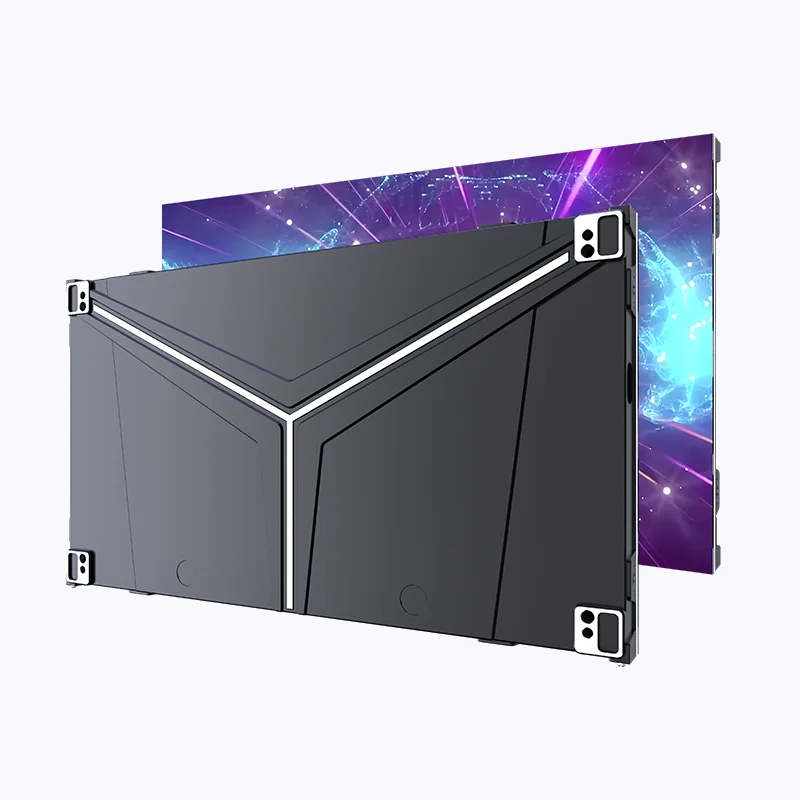
Choosing an LED wall for a conference, exhibition, broadcast production, or corporate event involves more than comparing screen sizes and rental prices. A suitable system needs to match the venue, audience distance, content, installation method, and production requirements. Yet rental decisions are often made under time pressure, leading to avoidable mistakes. Understanding these issues can help event organizers and AV professionals select an indoor LED display that performs reliably without unnecessary costs.
Choosing the Screen Size Before Understanding the Venue
A large screen can create visual impact, but bigger does not automatically mean better. Screen dimensions should be considered alongside the room layout, audience distribution, stage position, and viewing distance. A wall that is unnecessarily large can increase transportation, setup, rigging, and power requirements without significantly improving the audience experience.
For rental projects, the closest and farthest important viewing positions should be considered before confirming the configuration. This is particularly important for conferences and exhibitions, where some viewers may stand only a few meters from the indoor rental LED display while others are seated farther away.
Selecting Pixel Pitch Without Checking Viewing Distance
Pixel pitch is one of the most important specifications when choosing an indoor rental LED display. It describes the distance between adjacent pixels, with a smaller pitch generally providing higher pixel density and supporting closer viewing. However, selecting the finest available pitch simply because it appears more advanced can unnecessarily increase project costs.
The opposite mistake can be equally problematic. If the pitch is too large for the audience’s viewing distance, individual pixels may become noticeable and small text or detailed graphics can lose visual clarity. Rental companies should therefore evaluate the expected viewing distance first. They can then select a pitch appropriate to the application rather than choosing by specification alone.
Treating Brightness as a Simple “Higher Is Better” Specification
Indoor venues typically have controlled lighting, so maximum brightness is not automatically the most desirable characteristic. A display needs enough brightness to remain visible under stage lighting and ambient illumination, but excessive brightness can produce an uncomfortable viewing experience.
The lighting conditions should therefore be discussed with the rental provider before equipment is selected. Conference rooms, exhibition halls, studios, and auditoriums can have very different lighting environments. Matching the display to those conditions is more useful than simply requesting the brightest available rental panel.
Forgetting About Cameras and Live Production
Another common mistake is considering only what the audience sees with the naked eye. Many professional events are photographed, livestreamed, or recorded for later distribution. Under these conditions, refresh rate, grayscale performance, calibration, and image consistency become important considerations. Poorly matched equipment can produce flicker, banding, or inconsistent images on camera.
For a camera-facing indoor rental LED display, the production team should explain its camera requirements before the rental is finalized. Test footage can also be useful when the display will appear prominently in broadcasts, product launches, or corporate videos.
Ignoring Installation and Transportation Requirements
Rental systems are repeatedly assembled, dismantled, transported, and installed. A technically impressive panel can still become inefficient if its physical design makes these processes difficult. Cabinet alignment, handling, connection, maintenance access, protection during transportation, and installation time all affect the real cost of a rental project.
Rigging also deserves attention when the indoor rental LED display is suspended. The venue, supporting structure, installation method, equipment weight, and qualified personnel need to be considered before setup. Treating installation as an afterthought can create schedule problems and introduce unnecessary operational risks.
Choosing One Configuration for Every Event
A rental inventory should not be treated as a universal solution. A trade show booth may require close-viewing image detail, while a ballroom presentation may prioritize a larger screen and longer viewing distances. Broadcast environments may place greater emphasis on camera performance, whereas a simple corporate presentation may have different priorities.
The most effective procurement process begins with the event itself. Screen dimensions, audience distance, content type, ambient lighting, installation method, transportation, and camera requirements should all be established before equipment is reserved. This approach reduces the chance of paying for specifications that provide little practical benefit.
Where Coblinks Fits Into Indoor Rental Applications
For projects requiring fine detail and flexible visual design, the Coblinks TC Series provides a specialized option. The series uses common cathode flip-chip 4-in-1 LED technology with a 0.9375 mm pixel pitch and a standard 16:9 aspect ratio. Its reduced reflection, strong contrast, and uniform black surface are suited to environments where image quality is highly visible, including broadcast studios, auditoria, and corporate spaces.
The TC Series also emphasizes design flexibility. Its flexible modules can support arcs of different angles, allowing rental teams and system designers to create curved or other creative screen configurations. Combined with its wide viewing angle and flatness, this flexibility can be valuable for projects where a conventional rectangular wall does not fit the desired visual concept.
Making the Rental Decision More Practical
The best rental decision is rarely based on one specification. Pixel pitch, viewing distance, brightness, camera requirements, cabinet design, installation conditions, and event objectives need to be considered together. Comparing complete system performance rather than only the rental price can help professional buyers avoid expensive compromises.
Coblinks is a technology-driven LED display manufacturer specializing in indoor and outdoor fixed-installation and rental displays. Its manufacturing capabilities include complete SMT production lines and advanced production equipment, supporting customized display solutions for professional applications. For businesses planning a specialized indoor LED display project, contact Coblinks to discuss the appropriate display solution for the event.
