

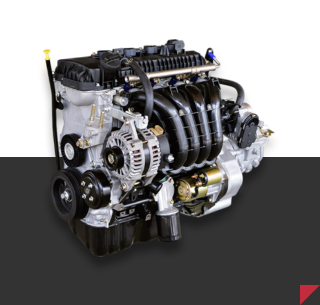
Vehicle electrification becomes considerably more complex once the chassis must accommodate equipment, cargo structures, or application-specific components. Space allocation, weight distribution, thermal management, and control architecture all interact with propulsion design, making integration an engineering exercise rather than a simple component replacement. This is where the relationship between auto electric motor technology and chassis architecture becomes especially important. Wuling Motors has developed capabilities spanning conventional engines, new-energy power systems, motor controls, and vehicle integration, providing useful context for understanding this transition.
Why Chassis Integration Changes Electric Powertrain Design
Specialized vehicles often have unusual weight distributions because their bodies may carry tools, storage modules, lifting equipment, or other working structures. Such additions can affect axle loads and available installation space, so propulsion components need to fit within a carefully planned mechanical layout.
Battery placement introduces another consideration. Positioning heavy components lower in the chassis can influence the center of gravity, while the location of electrical hardware affects cable routing, protection, service access, and thermal management. Engineers therefore need to evaluate the propulsion package as part of the entire vehicle architecture.
Control systems add another layer of coordination. Acceleration requests, regenerative braking, traction management, and auxiliary electrical loads must communicate effectively. The result is a more integrated approach to powertrain system development, particularly where specialized bodywork changes the vehicle’s operating characteristics.
Packaging, Weight, And Thermal Management
Compact propulsion components can create valuable design freedom, but available space still needs to accommodate batteries, controllers, cooling equipment, suspension components, and structural members. Efficient packaging is therefore closely connected with the practical dimensions of the chassis.
Weight distribution deserves equal attention. Excessive concentration around one axle can affect handling and component loads, while changes introduced by specialized equipment may alter the balance established during the original chassis design. Engineers commonly assess these factors through simulations and physical testing before production.
Heat management presents a further challenge because electric motors and controllers operate within defined temperature ranges. Cooling requirements vary according to power output, ambient conditions, workload, and driving patterns. Proper thermal architecture can therefore influence sustained performance as much as the nominal motor specification.
Designing The Interface Between Motor And Chassis
Mechanical mounting points provide the foundation for integration. The structure must accommodate torque reactions, vibration, road impacts, and repeated load cycles without compromising the surrounding chassis.
Electrical interfaces are equally significant. High-voltage connections, motor controllers, sensors, and communication networks need coordinated placement and protection. Service technicians also require sufficient access to components that may eventually need inspection or replacement.
Wuling’s official powertrain portfolio includes motor and electric-control products for EV, HEV, and PHEV systems, alongside gasoline engines and extended-range engine technology. The company also states that its engineering capabilities cover new-energy motor and controller development as well as complete-vehicle integration.
Matching Motor Characteristics With Vehicle Duty
Motor selection should begin with the work the vehicle is expected to perform. Peak power may matter during acceleration or hill climbing, while sustained output can be more relevant to vehicles carrying equipment over long operating periods.
Torque delivery is another important variable. Electric propulsion can provide strong torque from low rotational speed, which may benefit vehicles that repeatedly start under load. However, gearing, tire dimensions, vehicle mass, and control calibration all influence how that characteristic translates into road performance.
Duty cycles should therefore guide development decisions. A vehicle operating slowly inside an industrial site has different requirements from one traveling through urban traffic or carrying a specialized body over longer routes. This application-based approach helps connect auto electric motor characteristics with actual chassis demands.
Testing The Integrated Vehicle
Component-level testing provides useful information, but it cannot reproduce every interaction that occurs once the motor, controller, battery, chassis, and body operate together. Complete-vehicle validation can expose issues related to vibration, heat, braking behavior, energy consumption, and control responses.
Wuling’s published testing capabilities include dedicated new-energy powertrain facilities, two hybrid powertrain test benches, an AVL four-wheel-drive test bench, and a complete-vehicle drum emissions test bench. Its motor-controller testing capability covers new-energy control systems from components through system-level assessment.
Such testing becomes particularly valuable for specialized applications because additional equipment can change the vehicle’s mass and usage pattern. Engineers can compare different configurations under controlled conditions before a platform enters wider commercial deployment.
Moving Toward Flexible Chassis Architecture
Future specialized vehicles are likely to require greater adaptability as electrification expands into more applications. Modular chassis layouts can make it easier to accommodate different bodies, battery configurations, propulsion components, and auxiliary systems without redesigning the entire vehicle.
Software will contribute to this flexibility. Vehicle controllers can coordinate propulsion, braking, energy recovery, and auxiliary systems while adapting their behavior to different operating conditions. Hardware and software architecture therefore need to be considered together rather than developed as isolated layers.
Manufacturing capability also affects the feasibility of such platforms. Wuling’s powertrain business reports annual capacity for 100,000 new-energy motor assemblies and describes flexible production across multiple models. This type of manufacturing flexibility can be relevant when specialized vehicle programs require variations in configuration or volume.
Building Better Specialized Electric Platforms
Successful electrification depends on how well individual technologies work together inside the finished vehicle. Motor characteristics, battery placement, chassis structure, cooling systems, control software, and specialized bodywork all influence the final result.
For vehicle developers, the most useful design process begins with the application rather than with a standalone component. Once payload, duty cycle, operating environment, and body requirements are understood, propulsion and chassis decisions can be evaluated as a connected system.
That perspective also clarifies the evolving role of the powertrain system. Rather than functioning as an isolated source of propulsion, it increasingly forms part of a coordinated electrical and mechanical architecture. Wuling Motors‘ combination of conventional powertrain manufacturing, new-energy motor development, controller engineering, and vehicle integration illustrates how these disciplines are becoming increasingly interconnected.
