

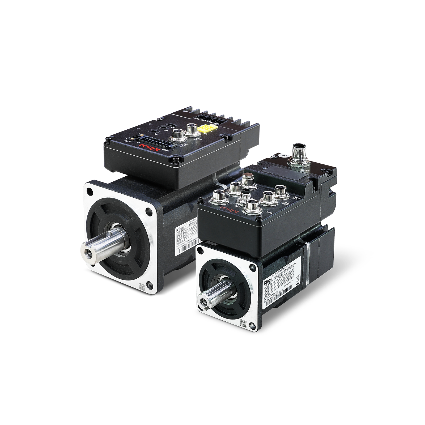
Designing automated machinery requires motion control components that balance space efficiency, electrical performance, and system reliability. Integrated servo motors and drives combine motor and drive electronics in a single assembly, reducing separate components and wiring requirements while helping machine builders save installation space.
Selecting the right platform requires evaluating operating voltage, communication protocols, mechanical mounting, thermal management, and protection ratings. Matching these specifications to actual application requirements helps engineers simplify system integration and avoid costly modifications during commissioning.
Assessing Power Requirements and Voltage Input Specifications
Selecting an all-in-one actuator requires calculating continuous and peak torque demands alongside operational speed profiles across target duty cycles. Engineers must verify that the internal motor windings and integrated power stage supply sufficient dynamic current during acceleration phases.
- Wide 24V to 60VDC low-voltage power supply options suit mobile and battery-powered machinery.
- Output power options ranging from 400W up to 1000W handle diverse industrial positioning demands.
- Short-term overload capabilities ensure stable performance during sudden torque spikes.
Integrating an integrated servo motor into cabinet-free machine designs reduces cable routing complexity between the main control panel and distributed motion axes. Sourcing units engineered with S1 continuous duty ratings ensures stable operational temperatures during prolonged production cycles.
Furthermore, machine builders must evaluate internal braking mechanisms and voltage absorption capabilities to manage regenerative power during decelerations. Choosing drive units equipped with overvoltage, undervoltage, and short-circuit protections safeguards sensitive power electronics against unpredictable supply line fluctuations.
Evaluating Industrial Fieldbus Networks and Communication Interfaces
Modern motion control architectures depend on fast, deterministic communication networks to synchronize multi-axis movements across automated assembly lines. Selecting drive units with versatile communication interfaces ensures smooth integration with centralized programmable logic controllers and industrial edge computers.
- Broad fieldbus protocol support includes EtherCAT, PROFINET, CANopen, and Modbus RTU communications.
- Fast response cycle times facilitate precise trajectory tracking in high-speed motion setups.
- Integrated communication interfaces reduce the need for separate drive components and simplify machine wiring.
Deploying a flexible integrated servo motor and drive unit enables equipment manufacturers to standardize machine chassis designs while supporting varied industrial network standards. Hardware platforms featuring convenient commissioning options—such as Type-C wired connections or Bluetooth debugging interface capabilities—help field technicians configure parameters quickly in crowded installation spaces.
In addition to primary communication channels, digital and analog I/O capabilities remain valuable for handling local sensor inputs, limit switches, and fast probe triggers. Localized I/O processing decreases signal latency and frees central processor capacity for high-level supervisory tasks.
Environmental Protection Ratings and Mechanical Thermal Design
Operating motion hardware outside traditional protective cabinets exposes electronic circuits and internal windings to ambient airborne dust, moisture, and temperature changes. Mechanical design engineers must evaluate ingress protection ratings and structural cooling mechanisms to ensure long-term durability.
- IP65 protection options prevent dust ingress and protect internal circuits from water spray.
- Compact housing structures maximize spatial efficiency in space-constrained machine frames.
- Natural cooling structures dissipate heat effectively through the outer motor casing.
Kinco’s iSMD series integrates the servo drive, servo motor, and bus interface into a single housing. The series features a standard 17-bit or optional 23-bit absolute encoder with battery-free multi-turn data retention. Both IP20 and IP65 models are available, allowing equipment designers to select a suitable protection level according to installation conditions. The specified operating temperature range is -20°C to +40°C.
Natural cooling is the specified cooling method for the iSMD series. During system design, engineers should consider mounting conditions, ambient temperature, operating load, and duty cycle to assess thermal performance under actual working conditions.
Mechanical vibration and shock loads should also be evaluated according to the requirements of the complete equipment. Checking installation stability and applicable product specifications helps ensure that the selected servo unit is suitable for the intended operating environment.
Integrating Safety Protocols and Functional Safety Standards
Functional safety represents a critical design factor when building automated machinery operating near human operators. Integrating safety circuits directly into motion controllers helps prevent workplace accidents while maintaining fast system recovery times after emergency stop events.
- Multi-model STO (Safe Torque Off) support provides independent safety circuit interruption.
- Isolated logic power inputs maintain communication status during main power safety cutoffs.
- Compliance with international safety standards streamlines final equipment certification steps.
Incorporating hardware-based Safe Torque Off functionality enables machine builders to disable motor output torque reliably without removing main DC bus power. This safety capability allows operator interventions—such as clearing jam points or reloading material hoppers—without requiring full system power restarts.
Furthermore, isolated logic power architectures ensure that position encoders and fieldbus communications remain active during safety stop events. Maintaining network connectivity prevents loss of absolute positioning data and eliminates time-consuming homing routines once safety guards are reset.
Building Flexible Machine Architectures for Scalable Manufacturing
The suitability of an integrated servo system depends on the machine’s motion requirements, installation layout, and operating environment. Machine builders should consider not only the initial space and wiring advantages but also maintenance access, thermal conditions, and the flexibility to accommodate future equipment changes.
Kinco‘s iSMD series combines servo motors and drive electronics in a single housing, with different communication interfaces, protection ratings, and I/O configurations available across models. Comparing these specifications with the machine’s voltage, torque, communication, and safety requirements helps engineers determine whether an integrated drive system is appropriate for their application.
A well-matched motion control architecture can simplify equipment integration while supporting consistent operation and future modifications.
