

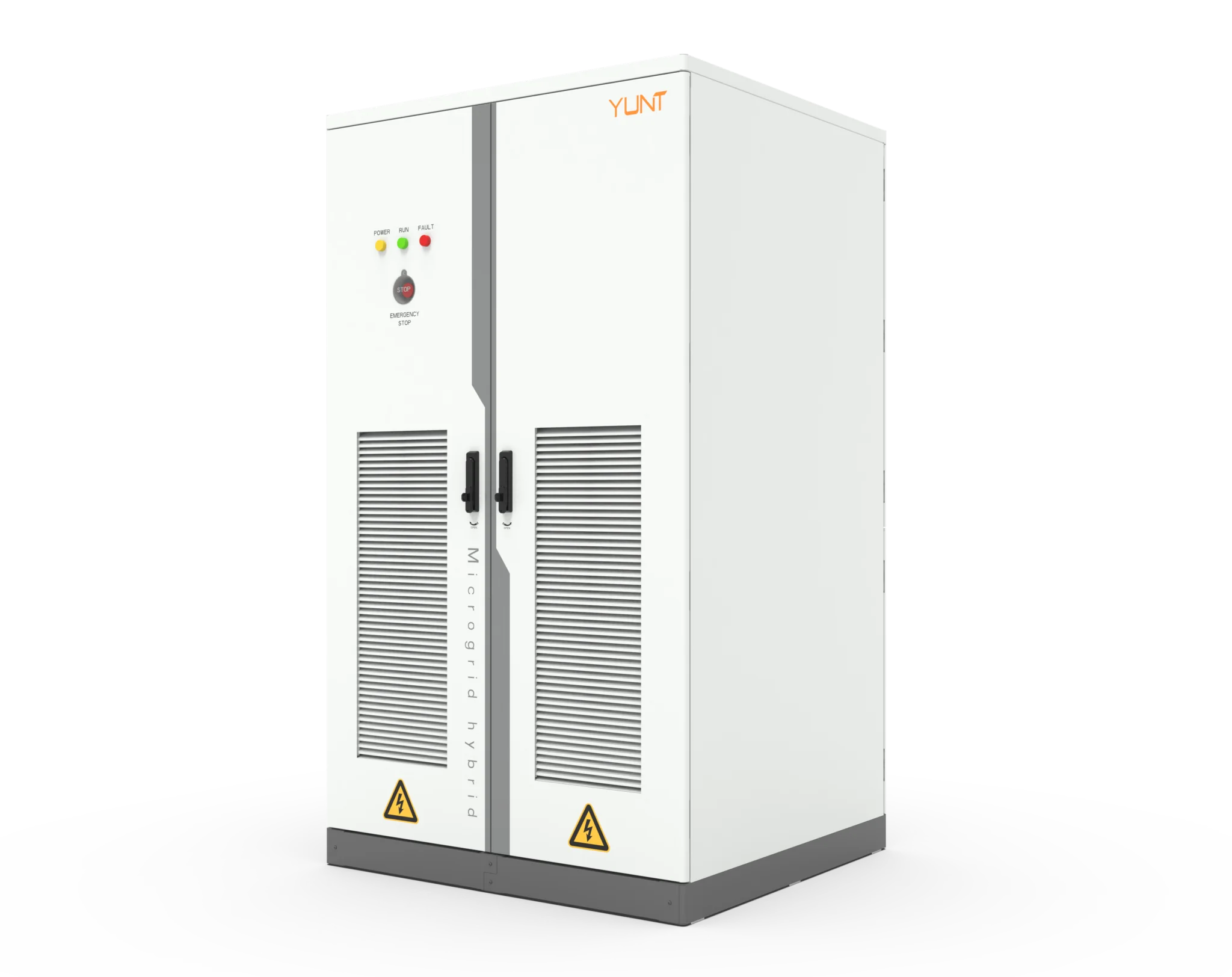
Commercial and industrial energy storage deployments require sub-second control responsiveness to maintain grid frequency stability, perform peak shaving, and protect facility machinery from transient voltage sags. Within a modern Battery Energy Storage System (BESS), overall operational speed depends heavily on how rapidly the central Energy Management System (EMS) and Battery Management System (BMS) exchange command signals with the power hardware. Choosing a high-performance BESS power conversion system eliminates digital processing lag, ensuring that bidirectional active and reactive power adjustments occur within critical milliseconds during grid disruptions.
Understanding Digital Communication Bottlenecks in Modern Storage Systems
Communication latency in energy storage facilities stems from physical bus delays, signal conversion overhead, and firmware processing queues. In traditional multi-cabinet setups, command signals travel across separated communication bridges connecting distinct battery racks, external meter gateways, and centralized inverter units. Standard industrial protocols like Modbus RTU running over legacy serial wiring often encounter packet collision risks when polling multiple battery strings simultaneously, introducing latency delays between 50 ms and 200 ms.
These communication delays severely compromise grid-support capabilities during abrupt load spikes or grid frequency deviations. When a large industrial motor starts up or a localized grid collapse occurs, the power conversion hardware may need to adjust output rapidly within the response time required by the application. High communication latency delays phase synchronization, causing temporary voltage drops that can trip sensitive programmable logic controllers and disrupt automated assembly lines. Resolving these responsiveness bottlenecks requires direct digital bus integration and optimized internal firmware architectures.
High-Speed Controller Area Network and Ethernet Bus Integration
Modern power electronics bypass serial communication delays by adopting high-speed Controller Area Network (CAN) and isolated Ethernet topologies. Utilizing dual CAN bus interfaces operating at transmission rates up to 1 Mbps allows power conversion modules to receive power setpoint adjustments directly from BMS controllers helping reduce communication congestion. By segregating internal battery management communication from high-level EMS grid management networks, hardware components process local battery data in real time while maintaining rapid grid interaction speeds.
Furthermore, implementing high-speed industrial protocol stacks directly on digital signal processor chips reduces internal firmware latency to under 2 milliseconds. Bidirectional conversion modules can process real-time power modulation commands and adjust high-frequency pulse-width modulation signals instantaneously. This low internal conversion delay enables advanced control modes, including Active Power / Reactive Power Control (PQ), Voltage / Frequency Control (VF), and Virtual Synchronous Generator (VSG) algorithms, providing dynamic inertia support to local industrial microgrids.
Key Technical Criteria when Evaluating a BESS PCS Supplier
Selecting a reliable PCS power conversion system supplier involves auditing both communication bus bandwidth and underlying power electronics hardware modularity. System integrators require hardware matrices that support flexible scaling across diverse commercial application scenarios. YUNT’s microgrid PCS power conversion system architectures, such as the Mars series, provide flexible power ratings from 30 kW to 225 kW within standardized 3U rack-mountable modules. Offering both 125 kW air-cooled and liquid-cooled configurations allows engineering teams to optimize thermal dissipation without compromising physical equipment footprint.
Sourcing hardware from an experienced manufacturer ensures that bidirectional conversion units integrate smoothly with supplementary microgrid modules. High-efficiency Maximum Power Point Tracking (MPPT) and DC-DC converters—such as the Mercury series achieving peak conversion efficiencies above 99%—allow direct DC coupling between solar arrays and battery banks. When combined with microgrid energy routers like the Neptune series scaling from 125 kW up to 1000 kW configurations, these integrated cabinets incorporate built-in Static Transfer Switch (STS) modules. In the event of a utility blackout, solid-state switching components detect grid loss and transition operating modes from grid-tied supply to off-grid backup in under 10 milliseconds, helping minimize control system resets across industrial facility loads.
Streamlining System Integration and Compliance Verification
Project development schedules depend heavily on vendor responsiveness and global certification compliance. Leading power electronics developers simplify initial project planning through structured technical workflows. Upon receiving site parameters regarding power ratings, voltage thresholds, and local utility regulations, engineering teams deliver customized technical proposals, electrical schematics, and adaptation plans within 72 hours. This rapid engineering response allows integrators to finalize system design parameters and accelerate project commissioning timelines.
International market access requires strict adherence to global grid connection standards and electrical safety codes. Sourcing core conversion hardware with established international certifications helps reduce regulatory compliance delays. High-quality modular products hold comprehensive global approvals, including European Union CE markings, Germany VDE standards, TÜV, and SGS certifications, alongside specific regional grid connection approvals such as United Kingdom G99 and Spain RD217002 regulations.
Long-Term Asset Protection and Smart Lifecycle Management
Maintaining optimal system responsiveness over a 15-to-20-year project lifespan requires intelligent diagnostics and simple maintenance workflows. Standardizing communication protocols using isolated RS485, CAN, and Ethernet interfaces allows facility operators to link power hardware directly with cloud-based diagnostic platforms. Intelligent pre-fault monitoring algorithms continuously evaluate internal thermal trends, switching speeds, and communication integrity, alerting maintenance teams before hardware faults disrupt facility operations.
Leveraging remote Over-The-Air (OTA) firmware update capabilities enables site managers to deploy communication protocol enhancements and control algorithm optimizations potentially reducing the need for some on-site technician visits to remote facilities. By partnering with an established hardware provider like YUNT, commercial developers gain access to high-density modular hardware, supported by a core team with more than 16 years of experience in power electronics product development within the new energy industry, along with technical support. Deploying low-latency power conversion modules, high-efficiency DC-DC units, and microgrid routers provides industrial facility operators with reliable power conversion platforms built to advance the global green energy transition.
