

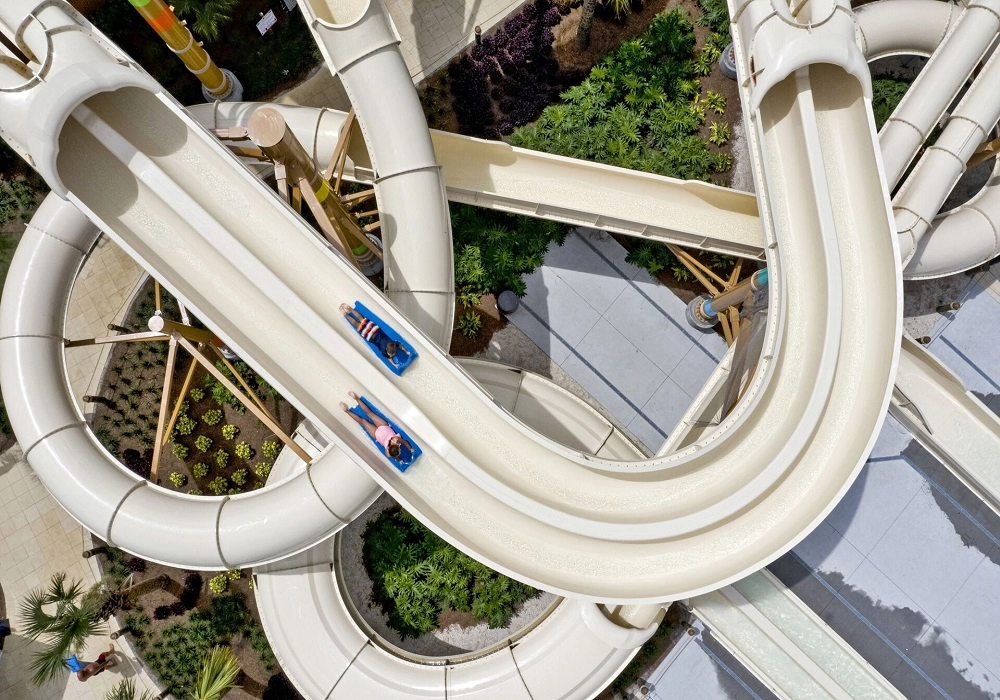
Opening day is the first time every part of a water slide project is tested at once. Staff, water systems, guest queues, and emergency procedures all have to work together before the first rider reaches the top of the tower. A checklist helps teams turn that long list into questions they can answer one by one.
Mechanical completion of a water slide does not mean the surrounding operation is ready. Jinchao supports commercial projects through water park planning, equipment manufacturing, construction guidance, installation assistance, and operational support, offering developers another perspective as they prepare to move from construction into daily operation.
Is the Daily Inspection Routine Defined?
Fiberglass surfaces, joints, handrails, stairs, platforms, restraints where applicable, and pool areas should be inspected according to procedures established for the attraction. Staff need to know what constitutes a normal condition and which findings require the equipment to remain closed until reviewed.
A useful water attraction opening checklist should also cover pumps, valves, water levels, filtration equipment, communication devices, emergency access, signage, and surrounding walkways. Recording inspection results creates a practical operating history rather than relying on informal verbal handovers.
Can Staff Handle Startup Procedures?
Startup routines should be specific to the park’s equipment and water systems. Operators may need to verify pump status, circulation, water chemistry, communication systems, attraction access, and dispatch areas before guests enter the ride zones.
A detailed aquatic facility startup guide can divide responsibilities by role, making it clear who checks mechanical equipment, who verifies water conditions, and who authorizes attractions to open. This arrangement is particularly useful when several attractions begin operating at different times.
Has a Soft Opening Been Planned?
A soft opening gives the team a controlled way to find problems before the public arrives. Invited guests, staff families, or a limited ticket allocation can use the attractions at reduced capacity while managers watch queues, dispatch, and exits. Issues found at this stage are far cheaper to fix than the same issues on a full day with thousands of visitors.
Soft-opening days also test communication. Radios, signage, public-address announcements, and lifeguard rotations all behave differently under real use. Teams should record what worked, what confused guests, and who is responsible for each correction before the full opening date is confirmed.
Are Capacity Limits Based on Real Dispatch Data?
Published hourly capacity is a ceiling, not a target. Actual flow depends on dispatch intervals, rider preparation, loading time, and how quickly guests clear the landing pool. Operators should time several cycles at different crowd levels and set an operating limit from those readings.
Jinchao’s Twin Racing Slide shows why this matters. It starts at 12–15 m, has 0.8 m flumes with one rider per lane, and is listed at roughly 300–400 persons per hour. Side-by-side racing can look fast, yet the real figure depends on how well attendants keep both lanes dispatching together, so the limit should be confirmed on site rather than copied from a brochure.
Are Water Systems Ready for Peak Demand?
Water circulation should be checked under operating conditions rather than only during a basic equipment test. Pumps, filtration, chemical dosing, balance tanks, and attraction supply lines need to work together at the expected flow rates.
A water park manufacturer can provide equipment requirements and technical documentation, while the operating team needs procedures for monitoring water quality throughout the day. Jinchao’s published guidance discusses filtration, pump capacity, chemical dosing, and water turnover as part of aquatic facility preparation.
Can Emergency Procedures Be Executed?
Written emergency plans are useful only when employees understand their individual responsibilities. Staff should know how to stop an attraction, communicate an incident, control access to affected areas, assist guests, and contact the appropriate emergency personnel.
Emergency drills can reveal practical weaknesses before they affect visitors. A strong water attraction opening checklist should include communication checks, emergency shutoffs, access routes, rescue equipment, staff positions, and escalation procedures appropriate to the site’s operating rules.
Is Maintenance Built Into the Schedule?
Daily operations can place substantial demands on mechanical and fiberglass components. Cleaning, visual inspections, water treatment, fastener checks, lubrication where applicable, and scheduled maintenance need defined intervals rather than being handled only after a problem appears.
Effective water park operations planning separates routine tasks from periodic technical work. Jinchao’s published operational guidance recommends daily inspection of fiberglass flume joints, cleaning to remove deposits and chemical residue, and protective maintenance for fiberglass surfaces.
Has the Handover Been Documented?
Opening preparation should finish with a clear record of equipment status, manuals, inspection documents, spare parts, staff training, and unresolved items. This information becomes especially valuable when the construction team and operating team are different groups.
A practical aquatic facility startup guide can serve as a bridge between installation and regular management by assigning responsibilities and recording the procedures used during commissioning. Jinchao states that its project services extend from master planning and equipment manufacturing to installation guidance and ongoing technical support.
Conclusion
Opening an aquatic attraction is a transition from engineered equipment to a living operating environment. A Water Slide may be ready for riders, yet inspections, startup routines, soft-opening trials, capacity limits, and documented handover decide whether the wider operation is ready for the public. A checklist that is answered with evidence rather than assumptions makes that transition easier to manage.
With approximately 36,000 square meters of manufacturing facilities and more than 300 water park construction cases reported on its official website, Jinchao supports developers across planning, manufacturing, installation, and operational preparation.
